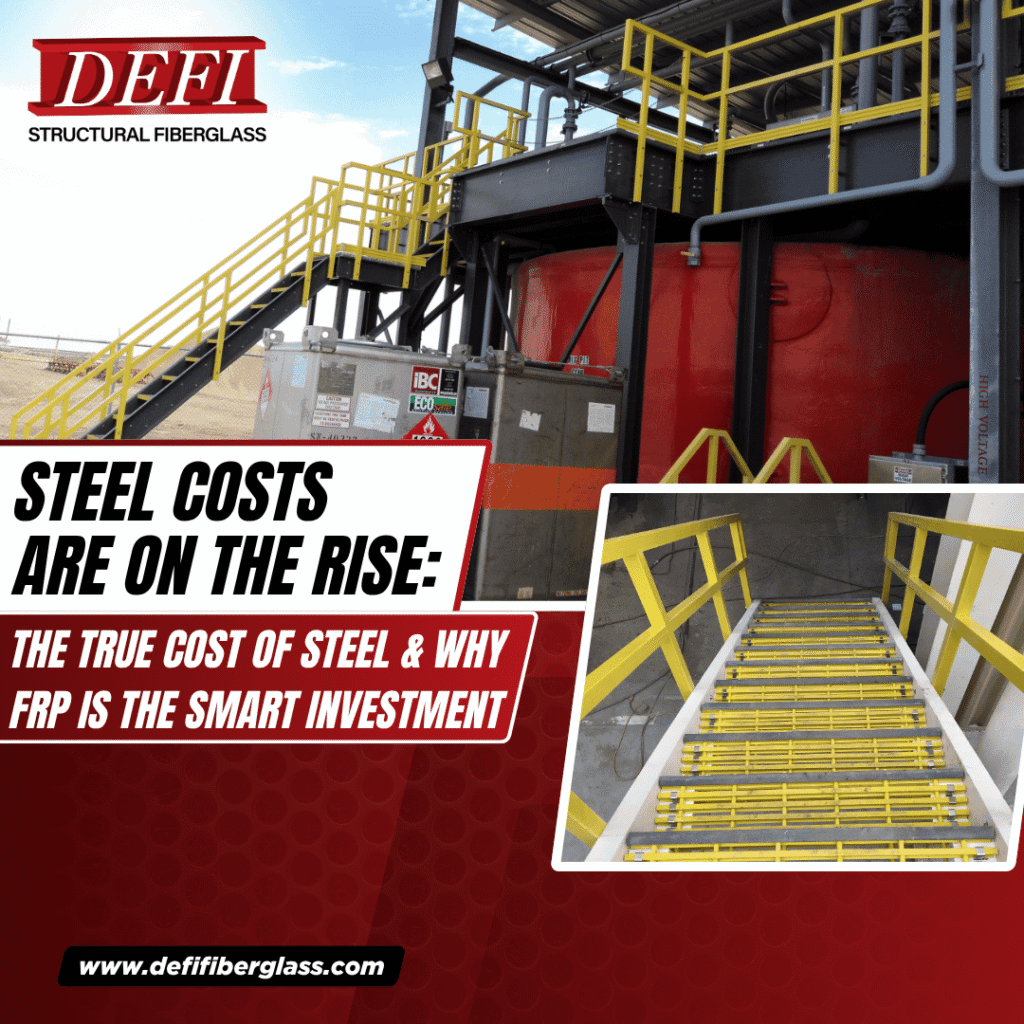
With the rising costs of materials and labor, business owners and project managers are taking a closer look at what’s the best bang for their buck and the best long-term investment. In the industrial and commercial world, steel has long been the go-to traditional material for stair treads, walkways, railings, platforms, and other structural elements. The true cost of steel isn’t just the initial purchase price tag. Once the installation, labor, maintenance, and repair costs are factored in, the total cost of ownership may be way more than you bargained for. So while the initial price of steel may be lower (and even that is on a steady rise), the overall cost of ownership of FRP and the costs associated with installation are lower. FRP isn’t the cheaper material. It’s the smarter long-term investment that helps keep your business operational and profitable.
What is the True Cost of Steel?
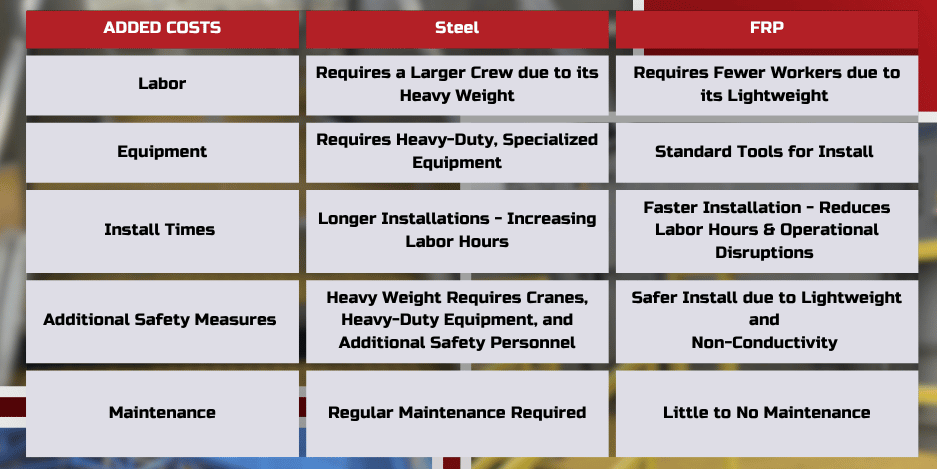
When calculating the true cost of steel, you have to take into account the initial material costs, maintenance costs, installation costs, and replacement/downtime costs.
Initial Material Costs – The price of steel fluctuates based on the market. Recently, there has been a steady increase in pricing. This can make it difficult to stay in budget for construction projects.
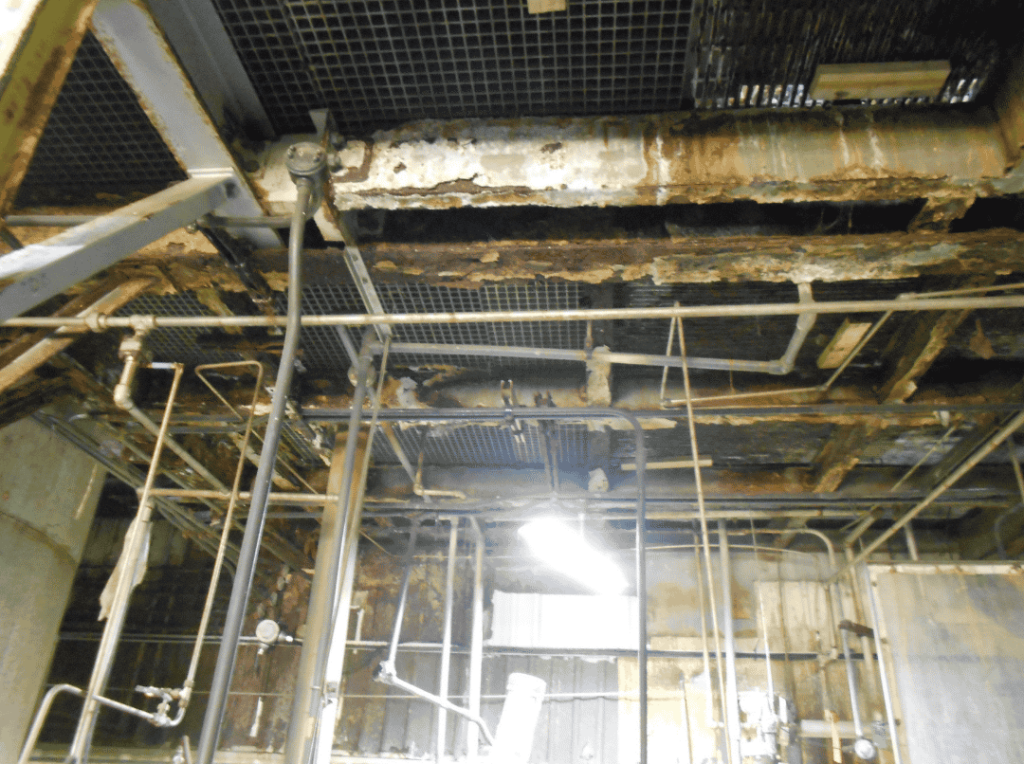
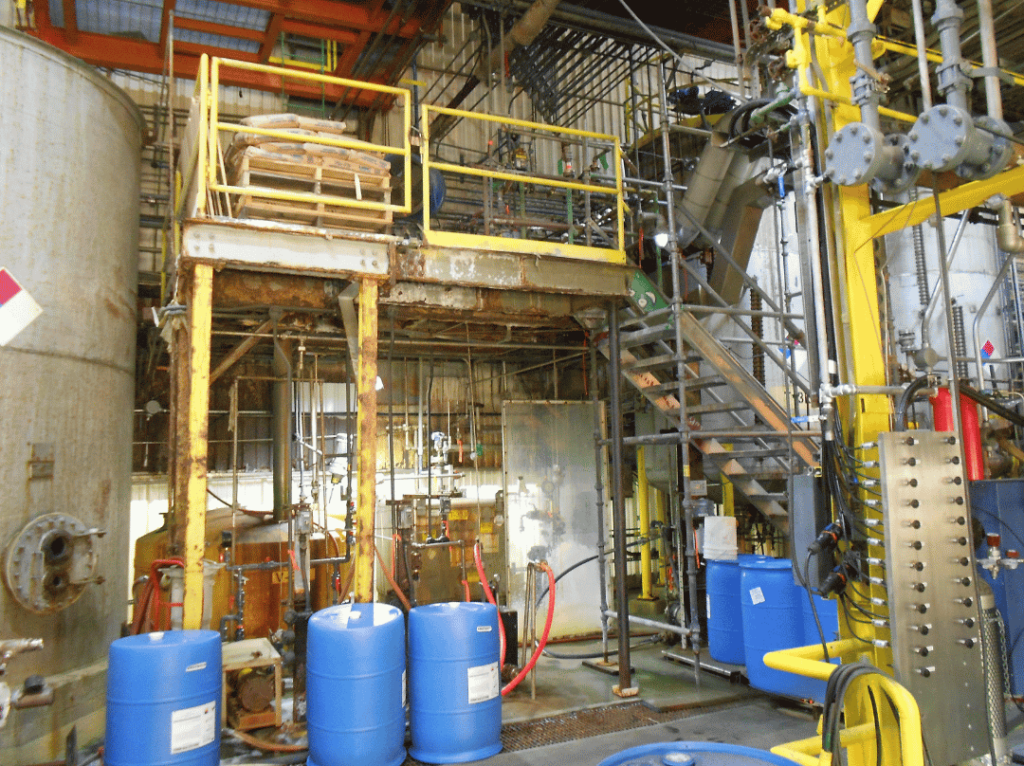
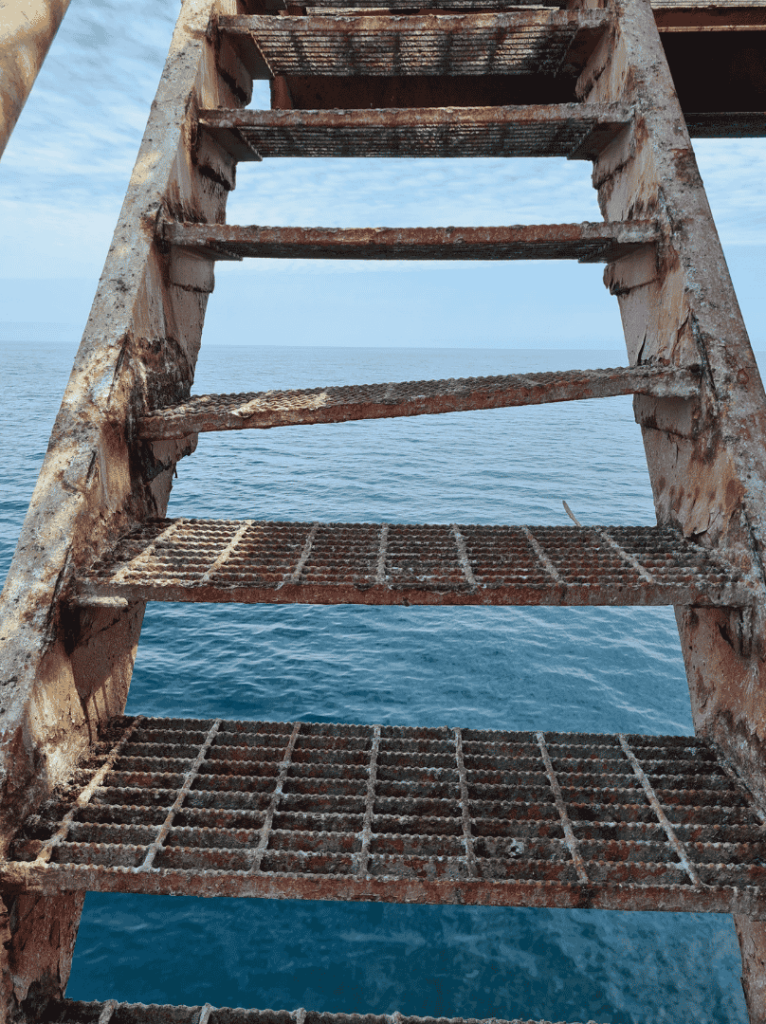
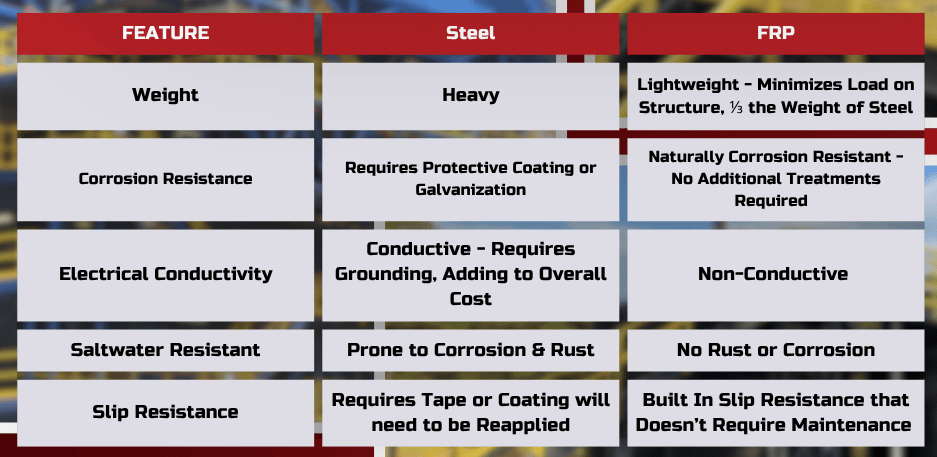
Maintenance Costs – Steel is susceptible to corrosion if it is exposed to moisture, chemicals, or saltwater. In most industrial environments, usually one, if not all, of these conditions are present. To prevent corrosion, steel requires coatings, which in turn require inspections to ensure the coating is intact and there is no damage from corrosion.
Installation Costs – Steel is very heavy. FRP weighs ⅓ the weight of steel. This makes moving, installing, and lifting steel harder and more dangerous. It often requires special safety equipment and safety personnel. The heavy weight also means more costs associated with labor and transportation.
Downtime – Inspections, maintenance, and repairs or replacements mean that the area or equipment may be out of commission until the work is completed. Depending on what and where the steel structure is, it can cause a halt to your operations, costing your company time and money.
Corroded Steel
Why is FRP the Smart Investment?
Corrosion Resistance
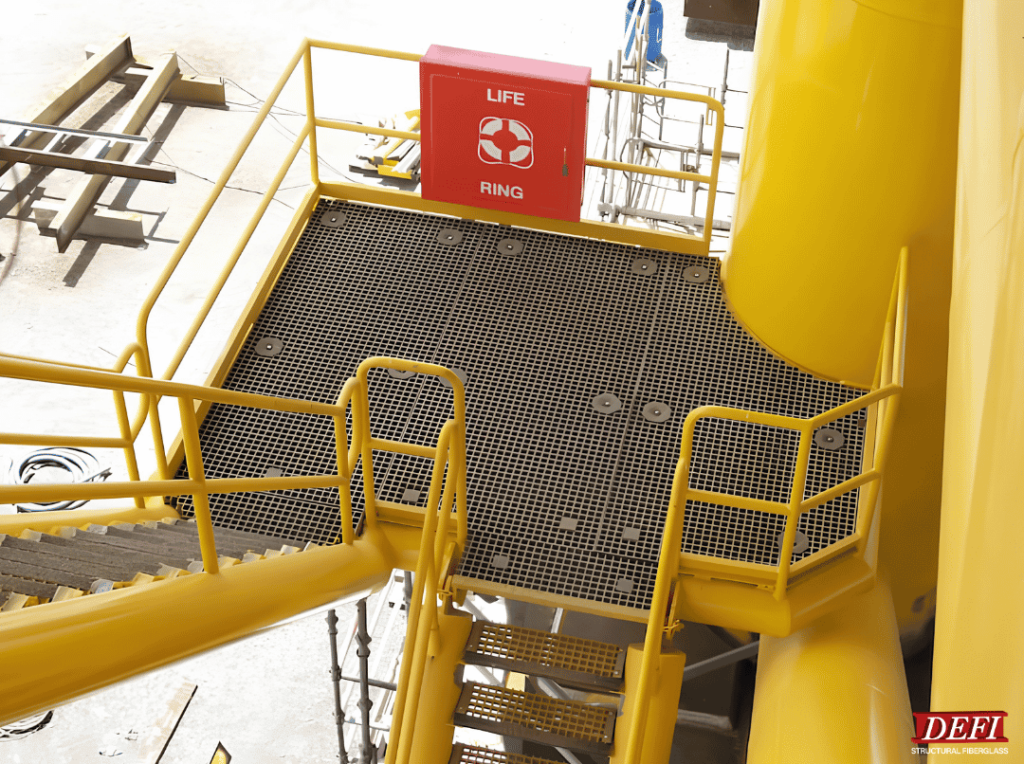
Unlike steel, FRP does not require coating or galvanizing to be corrosion-resistant. It is inherently resistant to moisture, saltwater, chemicals, and other corrosive environments.
Lightweight
Because FRP is a lightweight material, it is easier to transport and install, greatly lowering the installation cost when compared to steel. Specialty equipment isn’t required, just regular hand tools, and it takes less labor to install. It also provides a high strength-to-weight ratio, so it’s strong and supports your infrastructure without putting extra strain on the structure.
Low Maintenance
Because FRP doesn’t require extra steps to stop corrosion and is impact- and UV-resistant, it is an extremely durable material that requires little to no maintenance. FRP was built for long-term performance in demanding environments.
What Industries Benefit the Most from FRP?
While this is not a complete list, as our team has worked with clients in all different kinds of industries, these are some industries where only FRP can live up to the particularly harsh environments.
- Oil & Gas
- Chemical Processing Plants
- Water and Wastewater Treatment
- Offshore and Coastal Applications
- Electrical and Utility Facilities (FRP’s non-conductivity properties are extremely useful here)
- Petrochemical
- Mining
- Manufacturing Facilities
- Fertilizer Plants
- Data Centers
- Agricultural Processing
Our team can create customized fiberglass structures to fit your exact specifications. Contact us today to discuss your project and whether FRP is the right material for the job.
Learn more about our other featured projects here.
Check out our resources page here.
Follow us on LinkedIn!