At a wastewater treatment plant, there are many volatile organic compounds (VOCs) that need to be removed. If left untreated, these VOCs could cause health and environmental damage. Some of these VOCs include benzene, toluene, formaldehyde, acetone, and more. To remove these compounds, wastewater treatment plants use FRP biofilters. These are layered systems that use charcoal to pull out the VOCs. The challenge with biofilter systems is that many VOCs are highly corrosive. This makes steel and other traditional materials not viable options due to the high maintenance required to maintain the systems.
FRP and fiberglass, on the other hand, are highly corrosion-resistant, making them the perfect option for this type of application. The biofilter material is also heavy, up to 300 lbs per square foot. FRP is strong enough to support the weight of this type of system.
Why FRP is Perfect for this Application:
FRP is Corrosion-Resistant: Can withstand moisture, chemicals, salts, and VOCs
High Strength-to-Weight Ratio
Low Maintenance: Avoid frequent repairs, painting, and coatings, and save time and money
Long-Term, Reliable Solution
Step 1
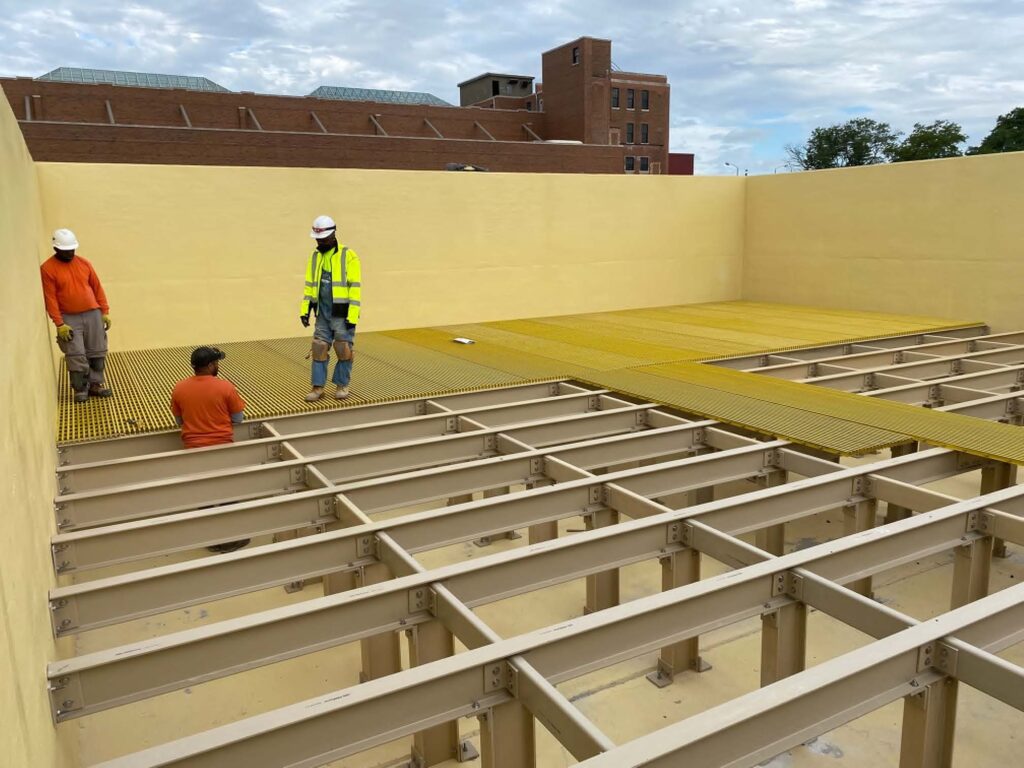
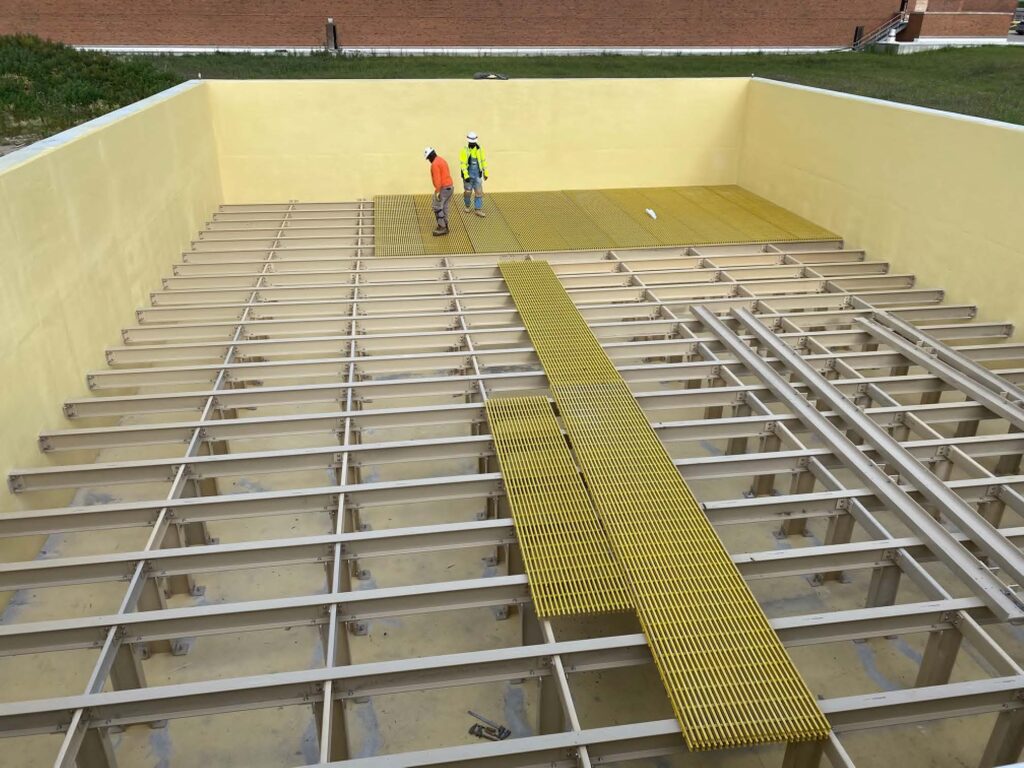
The first step in the process is building a support system that is strong enough to support the weight of the charcoal. Our team used 10” x ½” Wide Flange Beams, 10” x ½” Channels, and Angle and Flat sheets. All of these elements were constructed of vinyl ester resin (VEFR).
Step 2
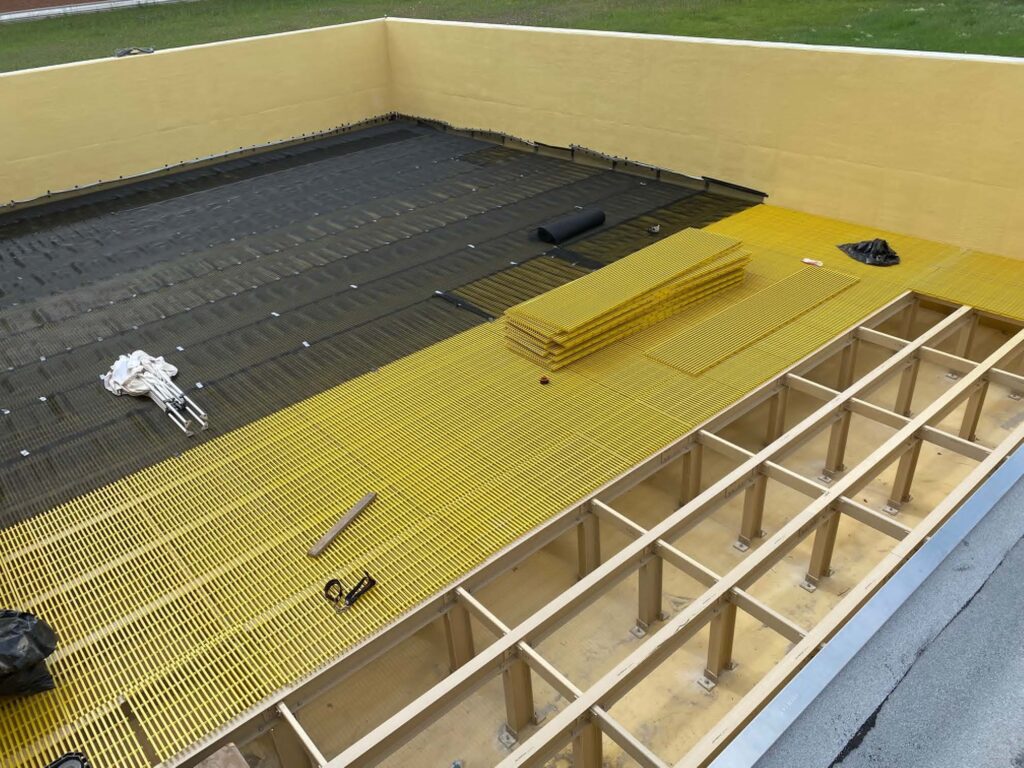
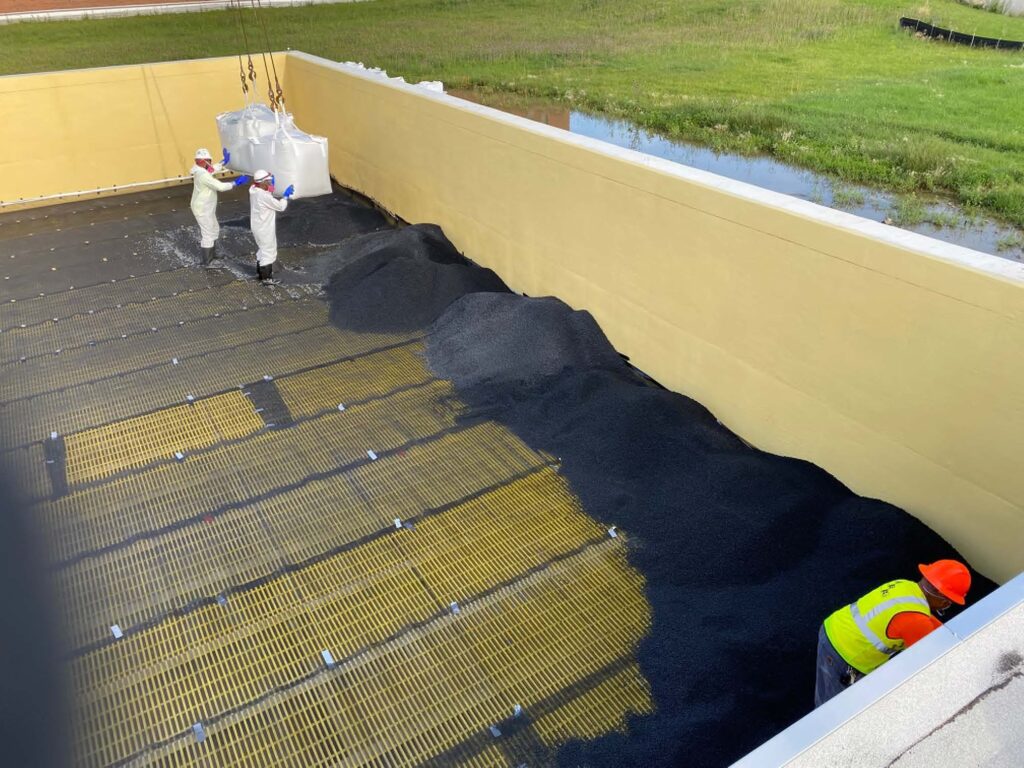
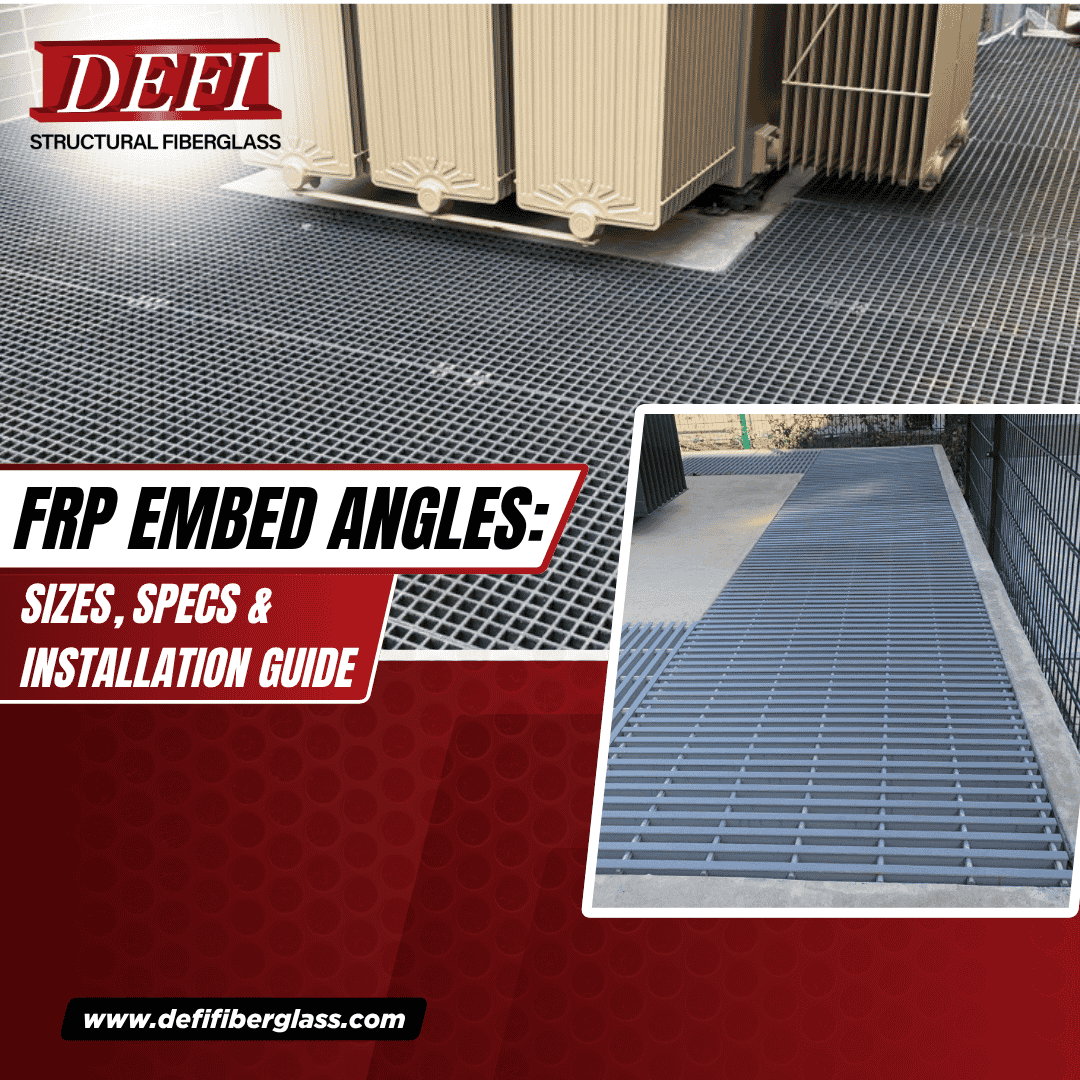
A thick 1 ½’’ VEFR pultruded grating was installed over the wide flange beams and channels. The pultruded grating supports the charcoal, separating it from the wastewater so the VOCs can be removed.
Step 3
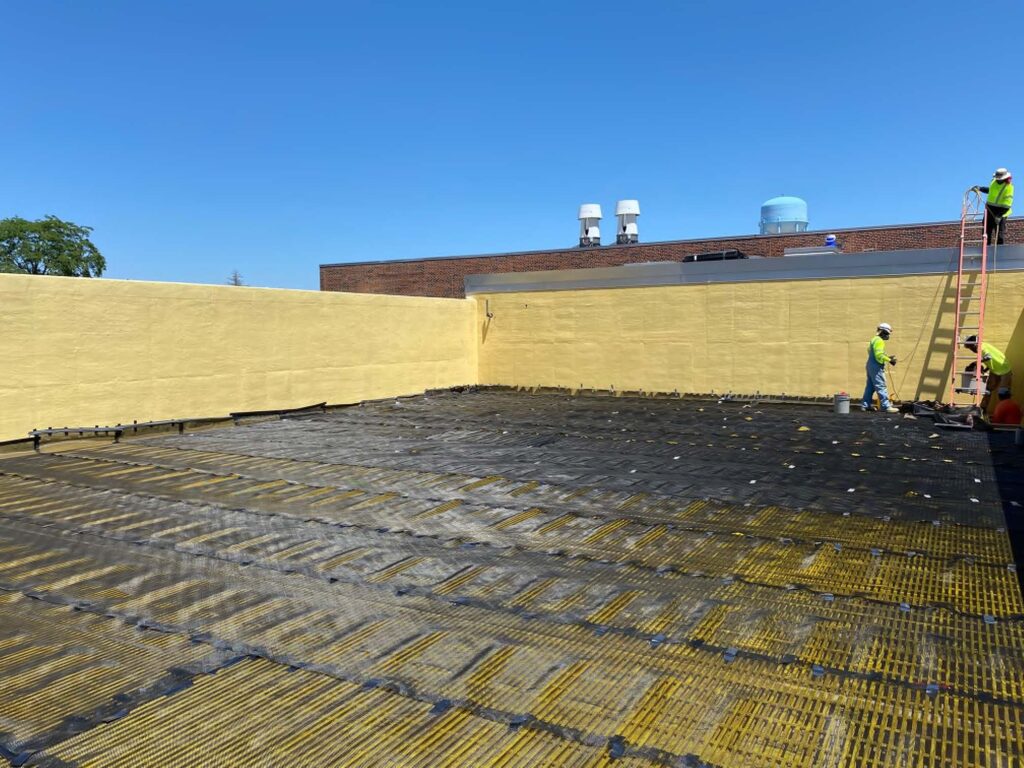
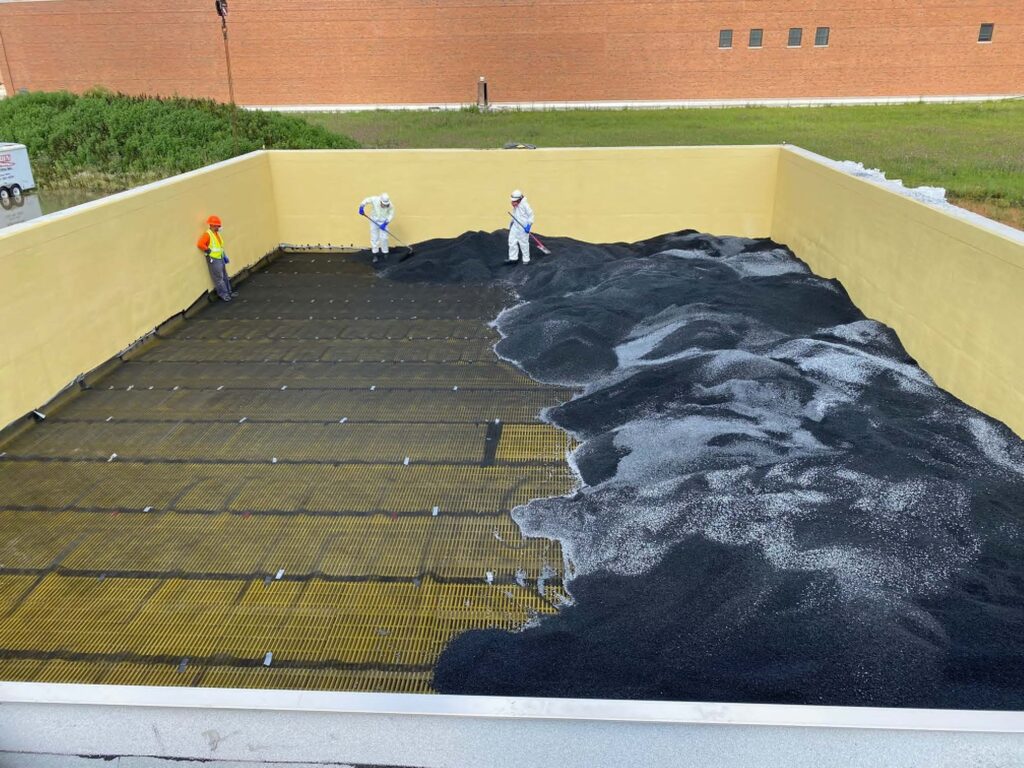
A netting was installed over the pultruded grating to reduce the amount of charcoal that can slip through the cracks while still allowing airflow.
Step 4
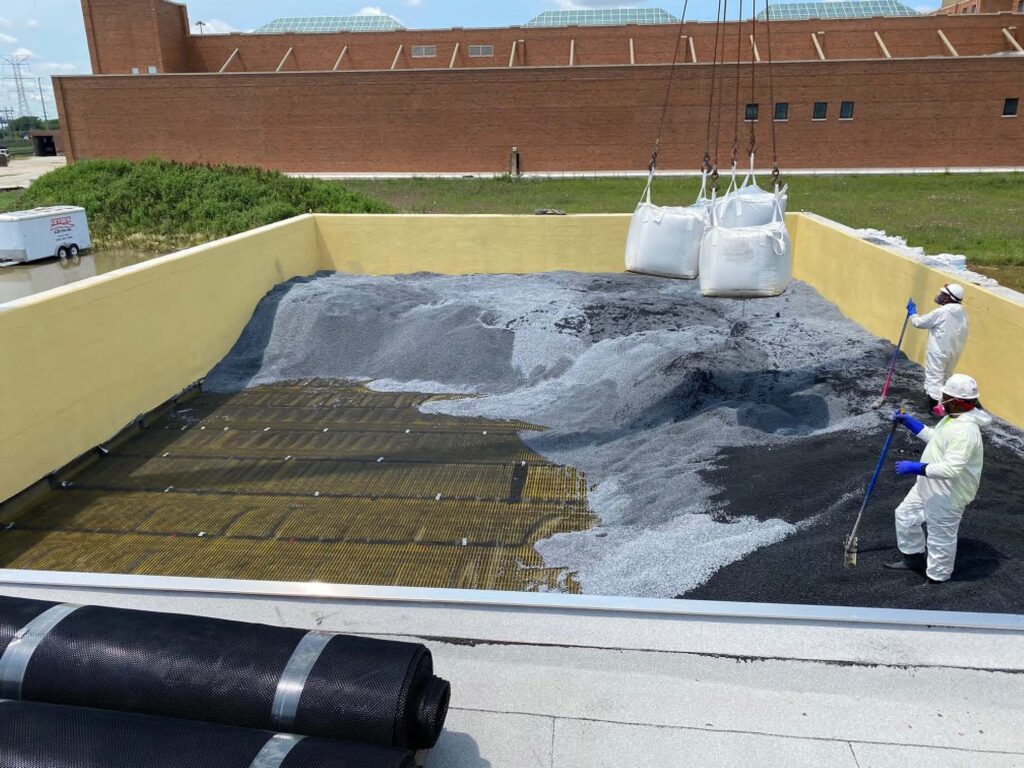
Charcoal was installed over the pultruded grating. This is used as the biofilter and pulls the VOCs from the wastewater.
Step 5
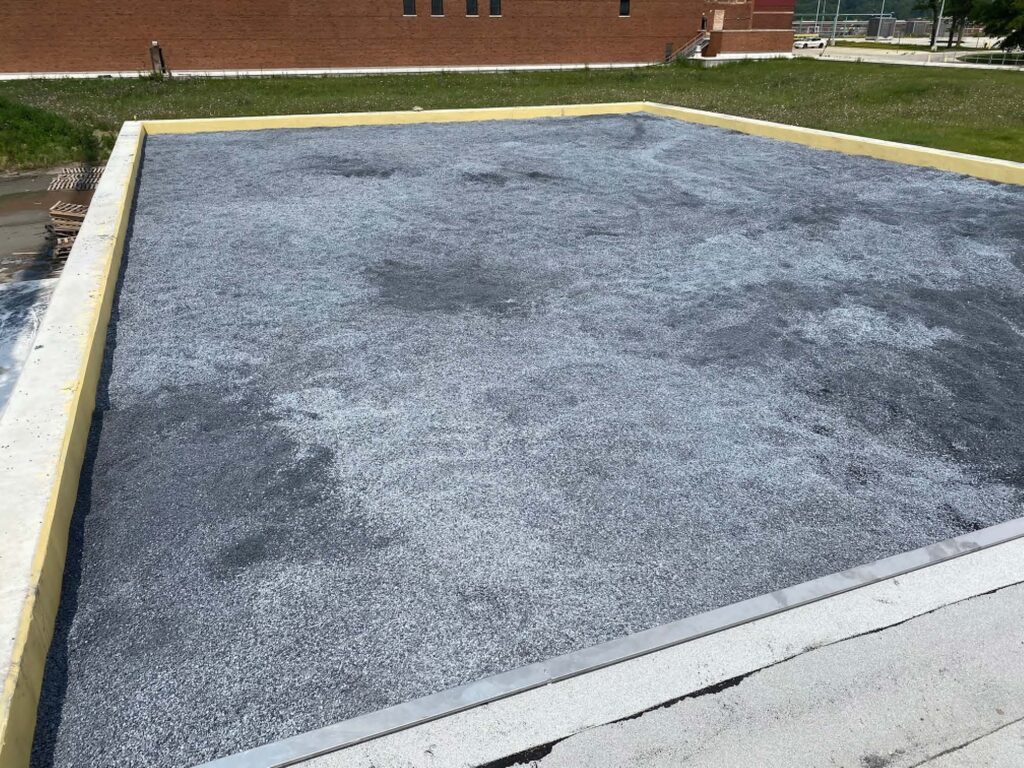
Once all of the charcoal is placed on the pultruded grating, it is raked to create a smooth top and is ready for operation.
Our team can create customized fiberglass structures to fit your exact specifications. Contact us today to discuss your project and if FRP is the right material for the job.