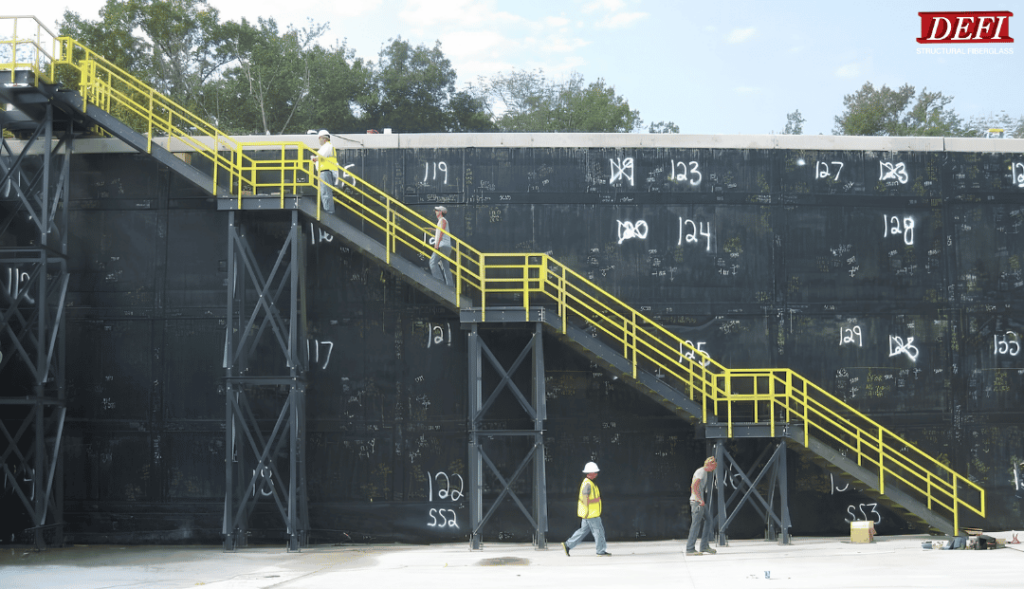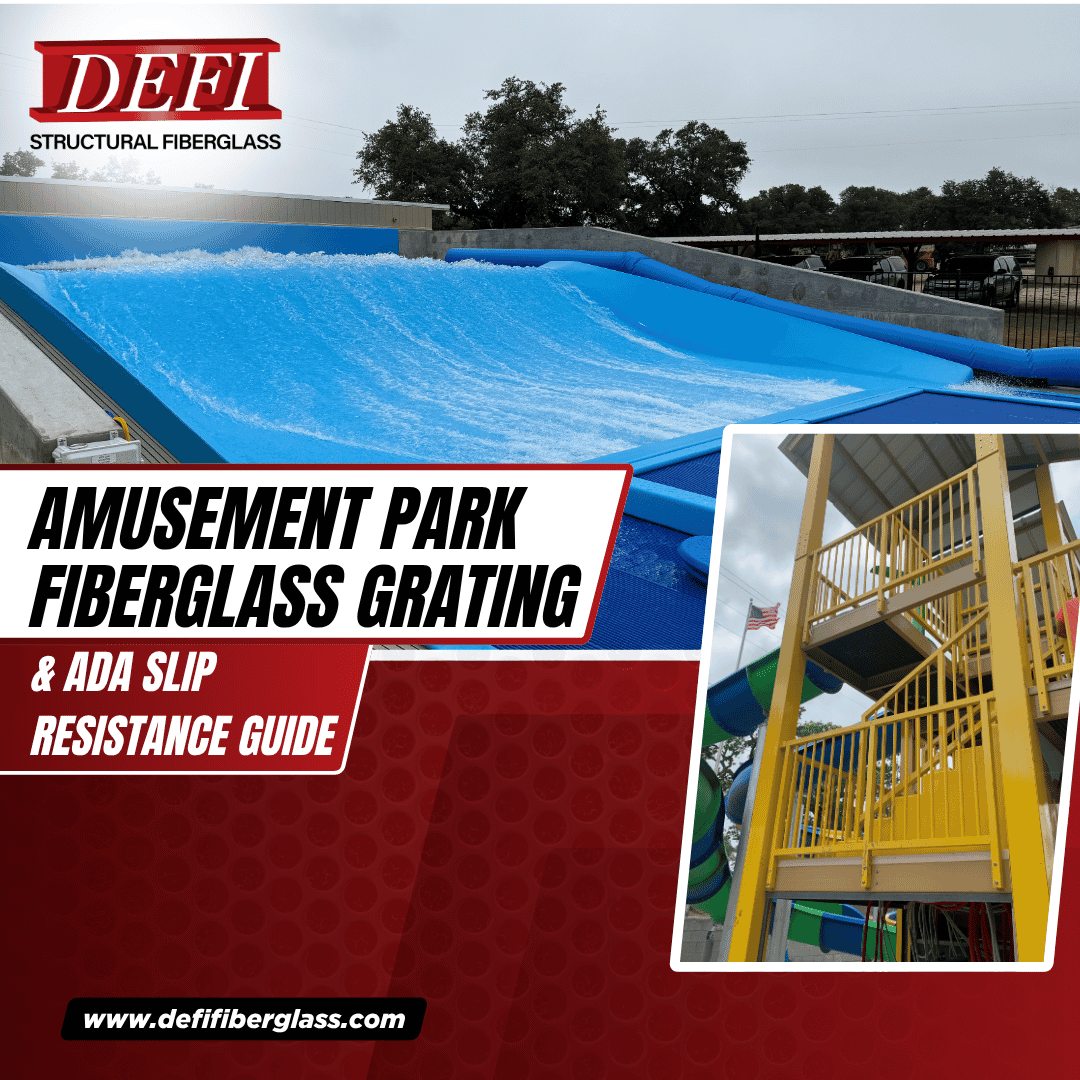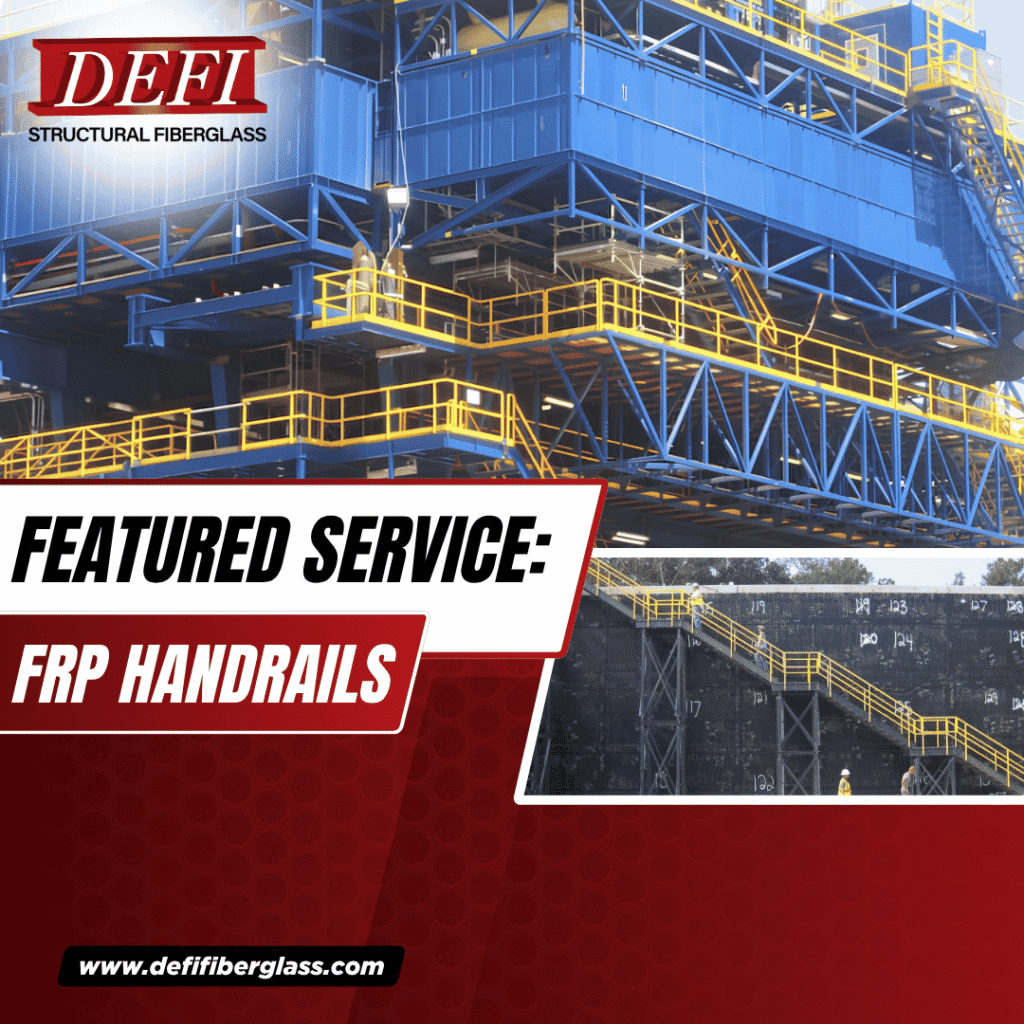
Handrails play a critical role in protecting your team members and staying in compliance with safety regulations. In industrial environments, handrails can be exposed to harsh environments and corrosive chemicals. Traditional materials, such as steel and aluminum, can corrode and become a safety hazard over time in these conditions. FRP handrails can withstand the harsh conditions and maintain structural integrity, even with daily use.
Benefits of FRP Handrails
Corrosion Resistant – In conditions that quickly deteriorate metal handrails, FRP is corrosion resistant. FRP can withstand humidity, chemicals, and saltwater. This makes FRP a great choice for chemical plants, marine environments, and water treatment facilities.
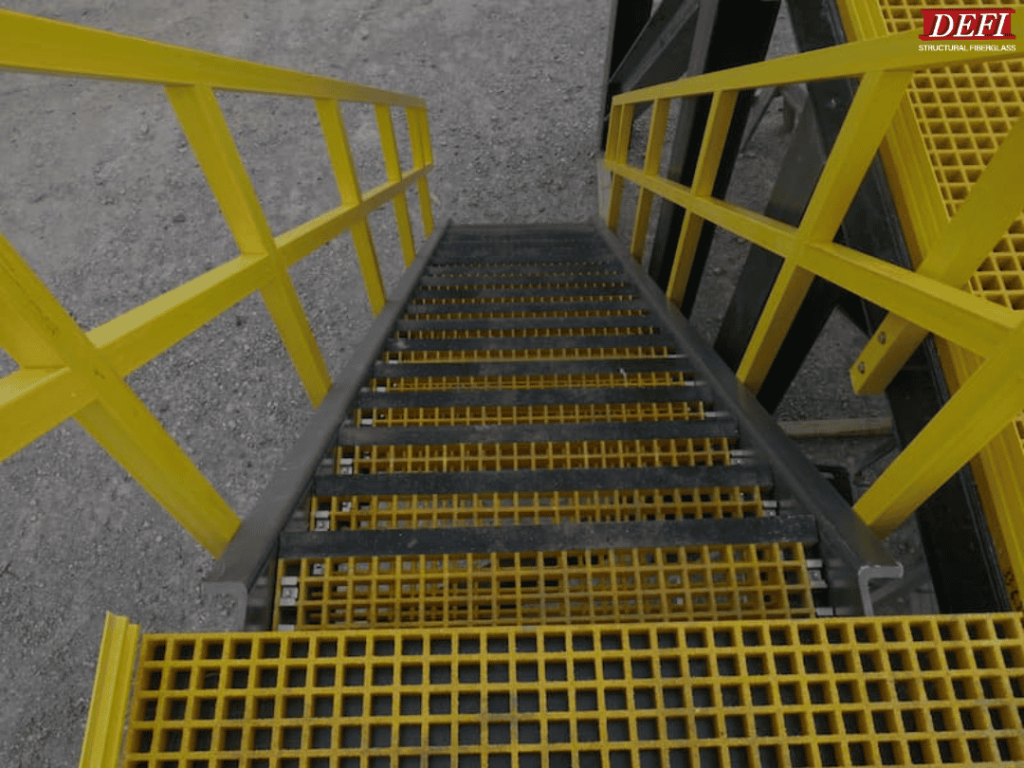
Low Maintenance – FRP is virtually maintenance-free. It does not require repainting or recoating like traditional materials. This helps lower maintenance costs and reduce downtime.
Lightweight but Strong – FRP is significantly lighter than steel but offers a high strength-to-weight ratio. FRP handrails provide strength without adding excessive weight to the structure and keep transportation and installation costs low.
Non-Conductive – FRP is non-conductive, unlike metal. This makes FRP handrails ideal for applications around electrical work and increases workplace safety.
UV Resistant – The resin used to create FRP is designed to withstand prolonged UV exposure without deteriorating. This makes FRP handrails perfect for outdoor applications in harsh conditions.
Common Applications for FRP Handrails
- Industrial walkways
- Access Stairs
- Docks
- Elevated Platforms
- Manufacturing Facilities
- Energy Infrastructure
- Water and Wastewater Treatment Plants
- Oil & Gas
Our team can create customized fiberglass structures to fit your exact specifications. Contact us today to discuss your project and whether FRP is the right material for the job.
Learn more about our other featured projects here.
Check out our resources page here.
Follow us on LinkedIn!