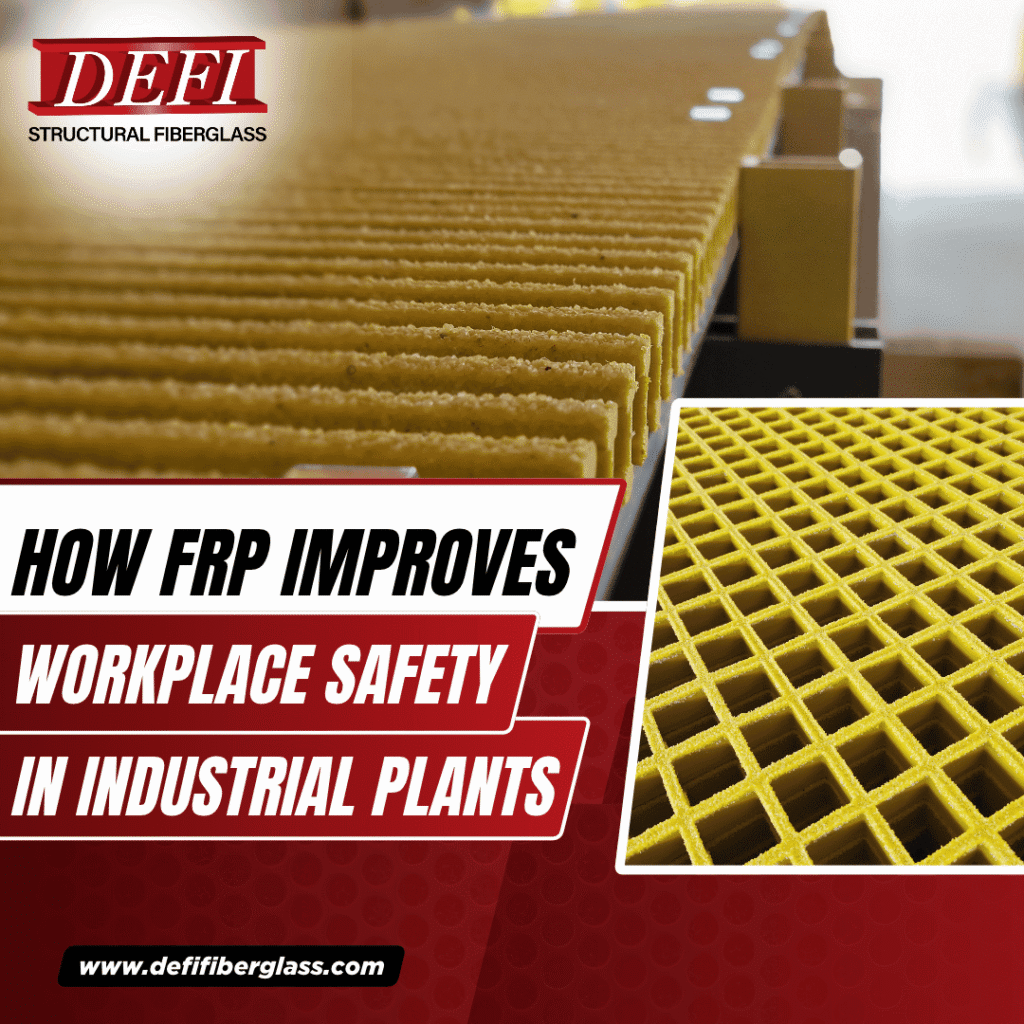
FRP (fiber-reinforced polymer) improves workplace safety because it removes the three hazards that cause the most industrial injuries at once: it doesn’t conduct electricity, it doesn’t corrode into a slip or structural hazard, and it holds its grip even when coated in oil, grease or algae.
Steel and aluminum fix one of those problems at a time. FRP grating, stair treads, handrails, platforms and ladder cages fix all three, which is how FRP improves workplace safety at plants in water treatment, petrochemical, offshore and oil and gas that keep choosing it over metal structures.
Key takeaways:
FRP is electrically non-conductive, eliminating the shock and electrocution risk that comes with metal grating, ladders and handrails near live equipment.
Slips, trips and falls caused 844 U.S. worker deaths in 2024 and cost an average of $57,314 per claim; FRP’s grit-top, anti-skid surface is built to cut that risk at the source, per the Bureau of Labor Statistics and National Safety Council data.
Unlike steel, FRP doesn’t corrode, so it doesn’t develop the thin spots, sharp edges and structural weak points that OSHA’s walking-working-surfaces rule requires employers to find and fix.
FRP is flame-retardant and self-extinguishes once the flame source is removed, adding a layer of fire safety steel and wood can’t match.
It’s about a third the weight of steel, which means fewer strain injuries during installation and maintenance, and faster jobs with smaller crews.
Slips, Trips and Falls Are the Hazard to Solve First
Slips, trips and falls are the single biggest driver of lost-time injuries in any industrial working environment, and they’re the hazard FRP grating is built to answer for workplace safety. The Bureau of Labor Statistics recorded 844 worker deaths from falls, slips and trips in 2024, and the Occupational Safety and Health Administration (OSHA) attributes close to 700 workplace fatalities a year, or 15% of all workplace deaths, to the same cause.
The injuries that don’t kill still cost. Falls and slips average $57,314 per workers’ compensation claim, according to National Safety Council injury data drawn from NCCI claims. That’s before the lost production time and the OSHA citation that can follow.
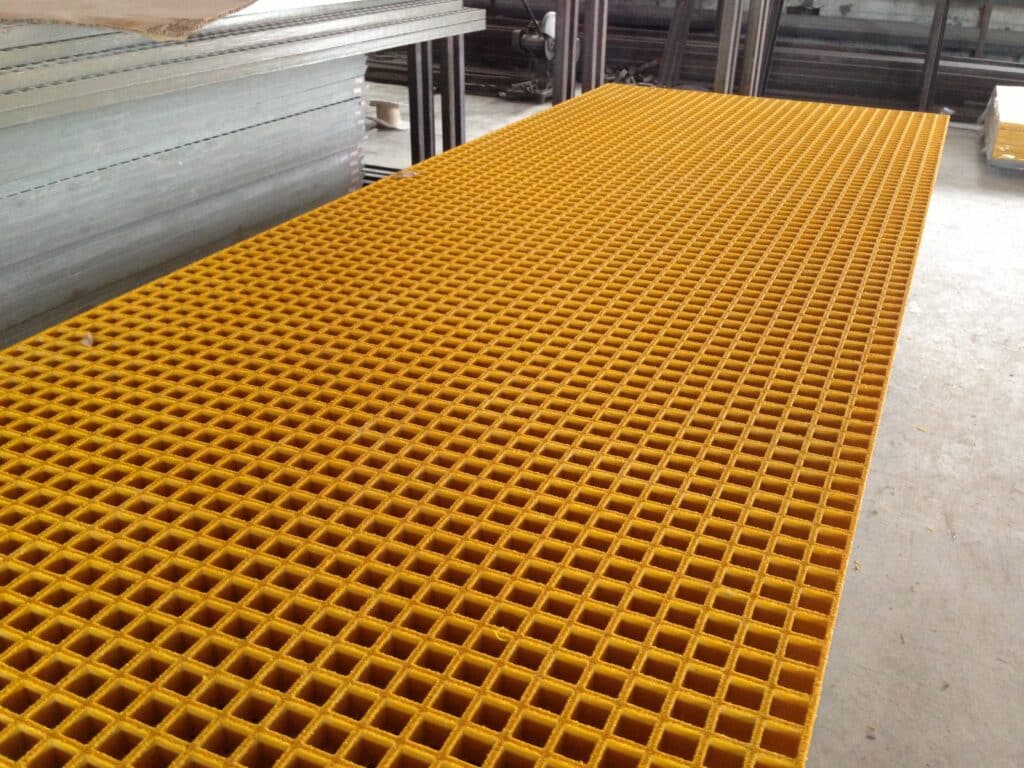
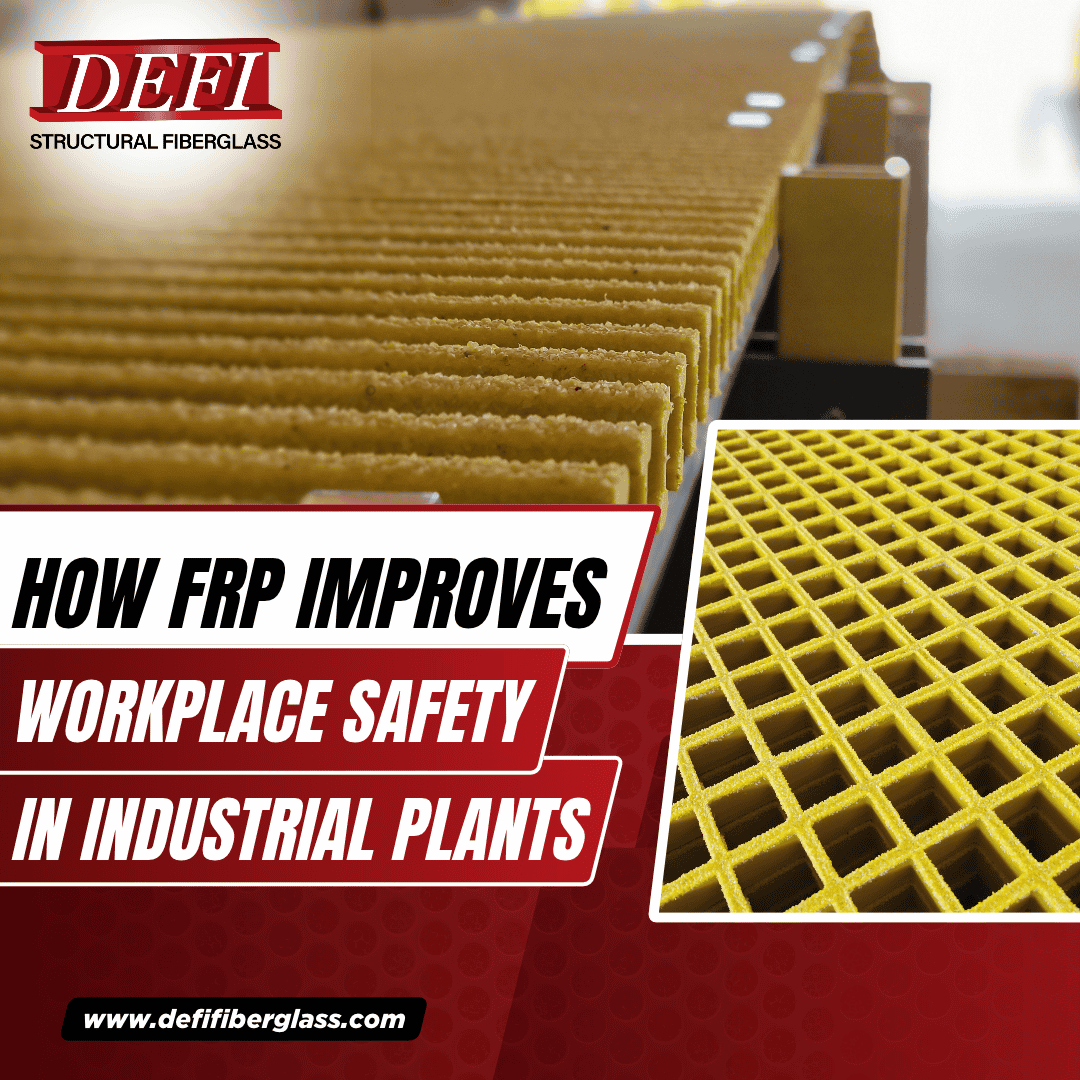
OSHA’s general industry standard for walking-working surfaces, 29 CFR 1910.22, requires every surface to be kept free of hazards like corrosion, leaks and spills, and inspected regularly for anything that creates a slip or trip risk. DEFI’s fiberglass grating ships with a grit-top anti-skid surface as standard, and that grip can be tuned for the environment so it holds up even when the surface is wet with oil or chemical residue, not just water.
“Walking-working surfaces are maintained free of hazards such as sharp or protruding objects, loose boards, corrosion, leaks, spills, snow, and ice.”, OSHA, 29 CFR 1910.22
Non-Conductive Material Removes the Shock Risk
FRP doesn’t conduct electricity, so in an industrial environment with live equipment it removes shock and electrocution as a possibility entirely, rather than just reducing it with insulation or lockout procedures. The Electrical Safety Foundation International puts average annual U.S. workplace electrical fatalities at roughly 150, and NFPA data shows electrical incidents are trending down as facilities move away from conductive materials near energized equipment.
That’s why DEFI’s non-conductive FRP products are standard around substations, transformers and switchgear, and why fiberglass has become the material of choice for ladders used near energized lines. As one DEFI breakdown puts it when comparing ladder materials, FRP is “the safer alternative to metal” precisely because the fiberglass and resin that make it up are inherently non-conductive, unlike aluminum and most wood, which can still carry a charge once wet.

Corrosion Resistance Stops Hazards Before They Start
Steel grating and handrails rarely fail inspection on day one. They fail years later, after corrosion thins the metal, sharpens broken edges, or weakens a weld no one can see from the walking surface. FRP sidesteps that failure mode: the material doesn’t rust or rot, so a structure that passes inspection on day one is still sound a decade later.
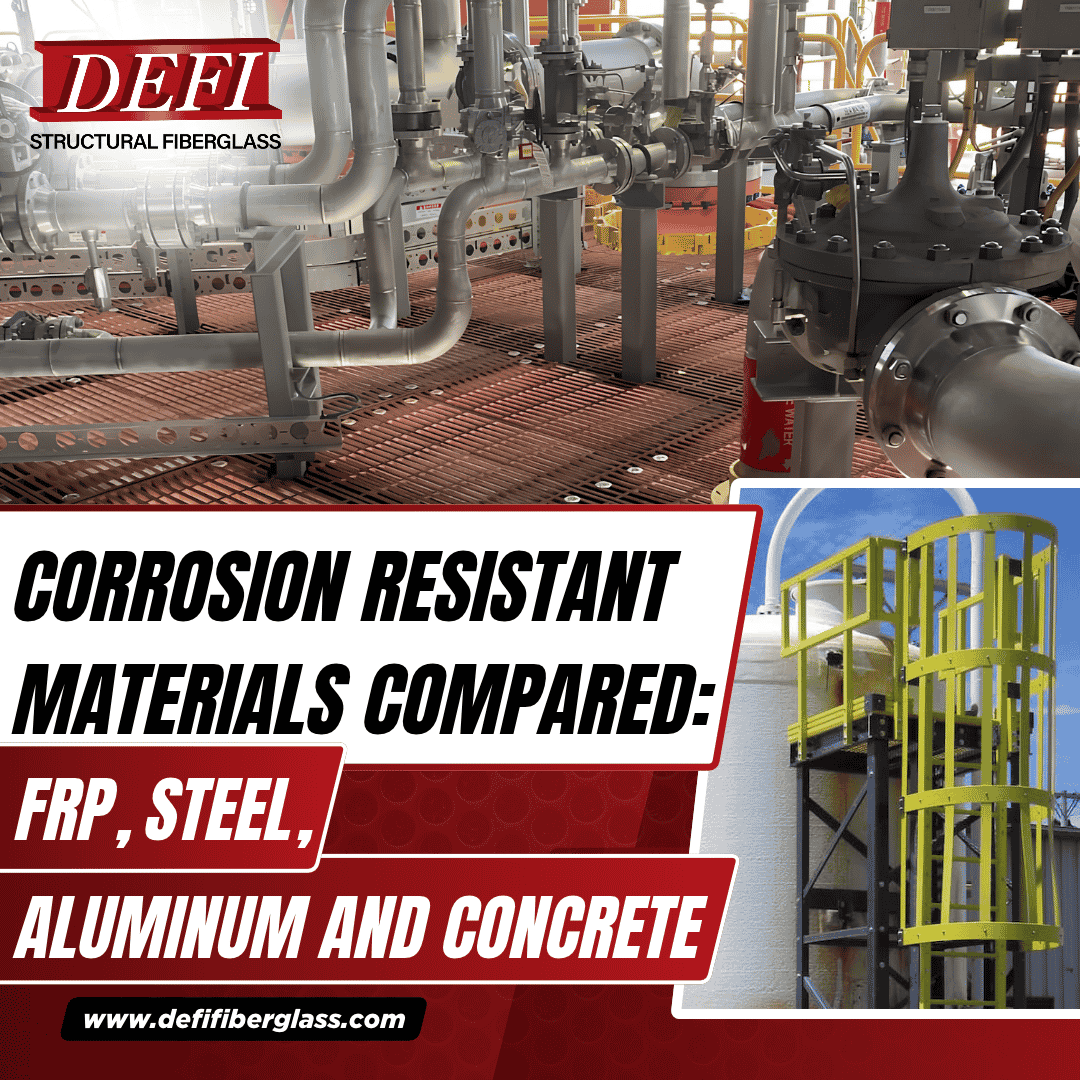
That matters most in the corrosive industrial environments DEFI builds for: wastewater plants, chemical processing plants, and the humid, salt-air conditions of the Gulf Coast, where steel corrodes fastest and workplace safety margins shrink fastest with it. A grating or handrail system that’s visibly degrading is also a liability question, not just a maintenance one, since a corroded edge or a grate that’s lost cross-section is exactly the kind of hazard 1910.22 requires employers to catch. DEFI’s structural fiberglass handrails and platforms are built to stay dimensionally stable in those same corrosive conditions for the life of the structure.
Fire Resistance Adds a Layer Steel and Wood Can’t Offer
FRP made with the right resin system is flame-retardant and self-extinguishes once the ignition source is removed, a real advantage over wood in a process environment where hot work, chemical vapors or static discharge are a risk. It won’t beat bare steel on raw heat tolerance, but steel carries its own hazard: it conducts heat and electricity straight into the structure, which fiberglass does not.
Lighter Material Means Fewer Handling Injuries
FRP structural shapes and grating weigh roughly a third of an equivalent steel section, which changes who gets hurt during installation and maintenance. Crews can usually cut and fit it with hand tools instead of heavy equipment, and routine work like pulling a grate panel for access doesn’t require a lift. Fewer overexertion injuries is a workplace safety win that never shows up on a grating spec sheet, but it shows up in the incident log.
Where These Safety Features Matter Most
Industry | Primary hazard FRP addresses | DEFI application |
|---|---|---|
Water & wastewater treatment | Chemical corrosion, wet walking surfaces | Grating, platforms, handrails |
Petrochemical & oil and gas | Corrosive chemicals, explosion/fire risk | Stair treads, walkways, pipe racks |
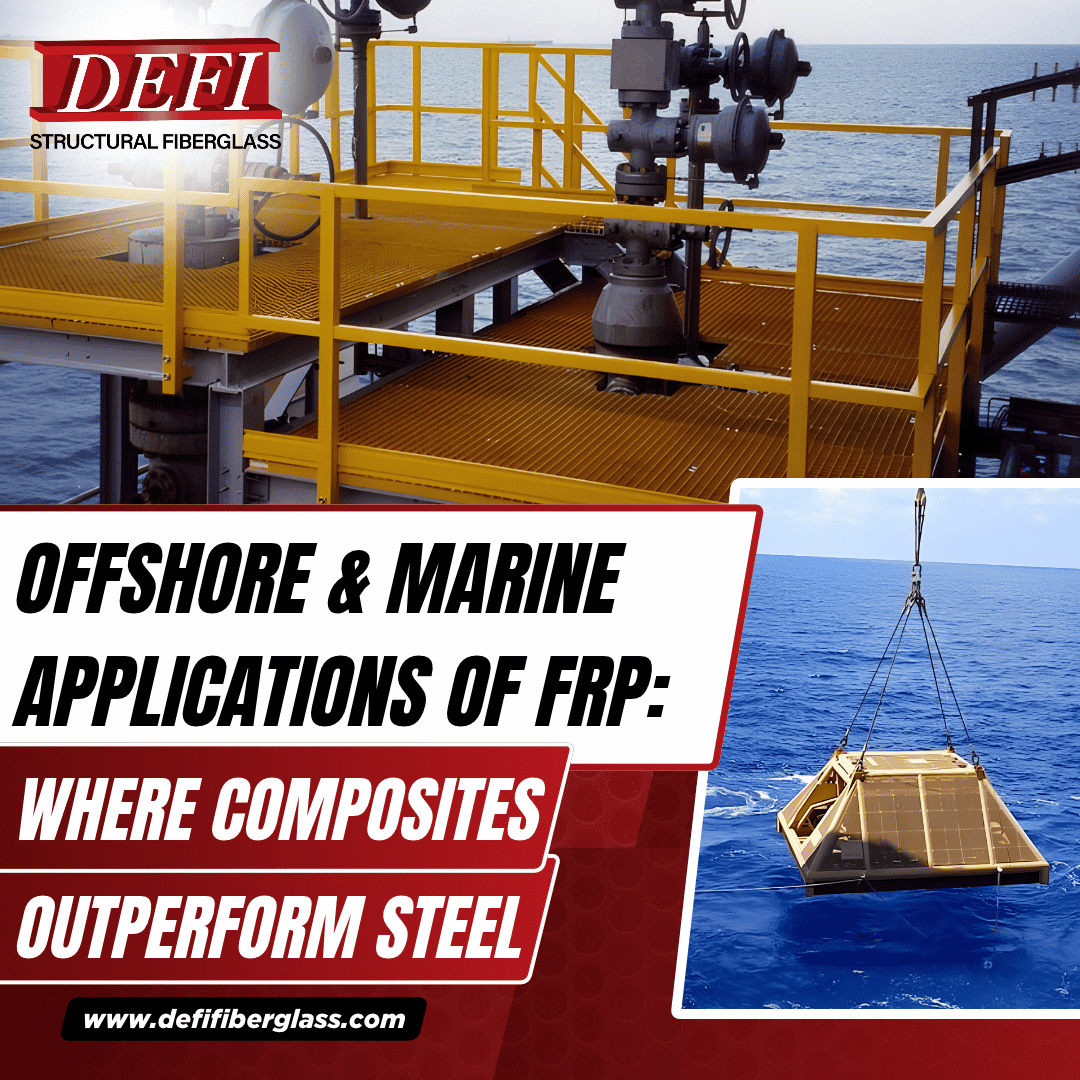
Offshore platforms & wind | Saltwater corrosion, weight limits | Catwalks, ladder cage systems |
Substations & utilities | Electrical shock | |
Amusement parks & commercial | High foot traffic, wet surfaces, visibility | Fluorescent, high-grip grating |
Across all five industrial sectors, the same three material properties drive workplace safety: it won’t conduct a charge, it won’t corrode into a hazard, and it won’t lose its grip when the surface gets slick.
FAQ
Is FRP safer than steel grating?
For slip, shock and corrosion risk, yes. FRP grating is non-conductive and corrosion-resistant, which steel is neither; steel still has an edge on raw fire tolerance and point-load strength in some applications, so the right choice for workplace safety depends on the hazard you’re managing.
Why is FRP grating used around electrical equipment?
Because fiberglass and the resin used to make it are inherently non-conductive, so a worker standing on FRP grating or using an FRP ladder near a transformer or substation has no path for a shock to travel through the structure, unlike with steel or aluminum.
Does FRP grating meet OSHA requirements for walking-working surfaces?
FRP grating is built to help employers meet OSHA’s 1910.22 general requirements for a slip- and hazard-free surface, since its anti-skid top and corrosion resistance keep the surface from developing the thinning, sharp edges or slickness the standard requires employers to fix.
Is fiberglass grating fire resistant?
FRP products made with a flame-retardant resin system are self-extinguishing once the ignition source is removed, which is a safety advantage over wood and a different risk profile than bare steel, which conducts heat and can warp under extreme fire exposure.
How much lighter is FRP than steel?
FRP structural shapes and grating typically weigh about a third of an equivalent steel section, which lowers freight costs and reduces strain and overexertion injuries during installation and maintenance.
What industries benefit most from FRP’s safety features?
Water and wastewater treatment, petrochemical, oil and gas, offshore platforms and wind, and any facility with corrosive chemicals or electrical equipment near walking surfaces see the biggest safety gains, since those environments combine the three hazards FRP is built to remove.
Can FRP grating keep its grip when wet with oil or chemicals?
Yes. DEFI’s grit-top anti-skid surface can be customized by environment and is designed to hold traction even when coated with oil or other slick substances, not just water.
The Bottom Line
This is how FRP improves workplace safety in industrial plants: by removing hazards at the material level instead of managing them with procedures. It doesn’t conduct electricity, it doesn’t corrode into a structural or slip hazard, and it keeps its grip in conditions that would make a steel or wood surface dangerous.
For a plant weighing where to start, grating and stair treads on existing walking surfaces are usually the fastest safety upgrade, with handrails and ladder cages next. DEFI Fiberglass designs and fabricates both standard and custom FRP structures out of its Houston and Lafayette plants for exactly these environments. Request a quote to find out what a switch to FRP would look like on your site.