If you’re building a data center or updating your infrastructure, there is a lot of planning that goes into it. From approving the design to choosing a construction company, there are many decisions that need to be made. One question that many ask is, “Should I use steel or FRP for data centers?” Before choosing the materials, learn how FRP stacks up against steel when it comes to overall cost, maintenance requirements, and safety.
Overall Cost
When comparing raw materials, steel is cheaper than FRP, but looking at the overall cost, including installation cost and the lifetime maintenance cost, FRP is the more cost-effective option.
Installation Requirements – FRP is a simple install. It’s lightweight, so there’s no need for heavy-duty equipment like cranes. FRP can also be installed with basic hand tools. Steel, on the other hand, requires more safety measures for the installation due to its heavy weight. Oftentimes, steel requires specialized equipment, a larger crew, and safety personnel. All of these increase equipment and labor costs.
Lifetime Cost and Maintenance – FRP is naturally corrosion resistant, and besides the occasional cleaning, requires no maintenance. Steel is highly corrosive, requiring coatings and galvanizations to prevent rust. This drives up the lifetime cost and maintenance requirements of steel.

Electrical Conductivity & Safety
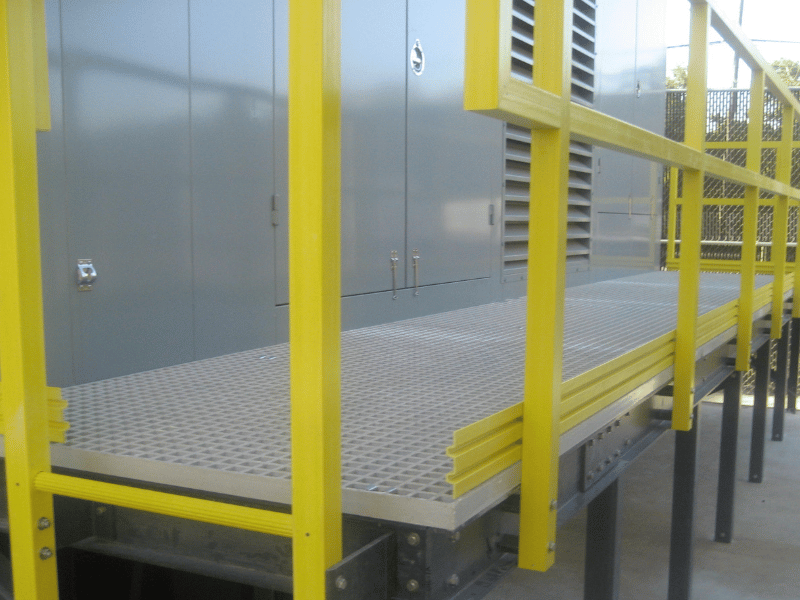
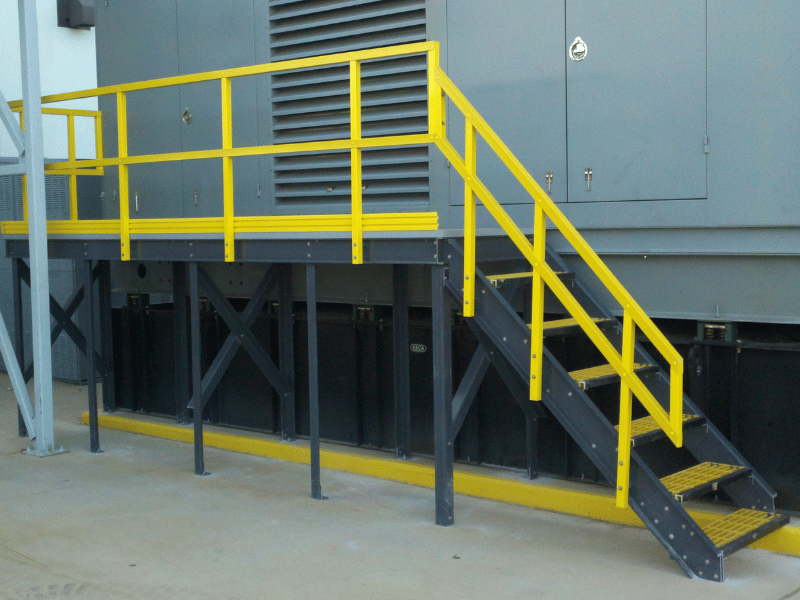
At a data center, there are many electrical components. FRP can be used as platforms, handrails, and stairs around these components without the worry of electrical shock or the need to be grounded. This makes FRP a great choice for generator platforms. Steel is a good conductor, making it a bad choice to use around electrical work.
Installation Requirements – FRP is a simple install. It’s lightweight, so there’s no need for heavy-duty equipment like cranes. FRP can also be installed with basic hand tools. Steel, on the other hand, requires more safety measures for the installation due to its heavy weight. Oftentimes, steel requires specialized equipment, a larger crew, and safety personnel. All of these increase equipment and labor costs.
Lifetime Cost and Maintenance – FRP is naturally corrosion resistant, and besides the occasional cleaning, requires no maintenance. Steel is highly corrosive, requiring coatings and galvanizations to prevent rust. This drives up the lifetime cost and maintenance requirements of steel.
Electrical Conductivity & Safety
At a data center, there are many electrical components. FRP can be used as platforms, handrails, and stairs around these components without the worry of electrical shock or the need to be grounded. This makes FRP a great choice for generator platforms. Steel is a good conductor, making it a bad choice to use around electrical work.
Durability
FRP is resistant to UV damage, impacts, chemicals, extreme weather, and saltwater, making it an extremely durable option. While steel is also a durable material, it can be affected by chemicals, high temperatures, and moisture, leading to damage and increasing maintenance needs.
Strength
Steel is incredibly strong, but when comparing strength-to-weight ratio to FRP, it is lower than FRP. With FRP, you get the best of both worlds: a lightweight material (⅓ the weight of steel) with an extremely high strength-to-weight ratio.
When it comes to generator platforms and other critical infrastructure in data centers, FRP stands out as the superior choice. It provides a low to no-maintenance option that is cost-effective and durable.
Contact us today to discuss your project and if FRP is the right material for the job.
Check out our resources page here.
Follow us on LinkedIn!