


Does Fiberglass Conduct Electricity?
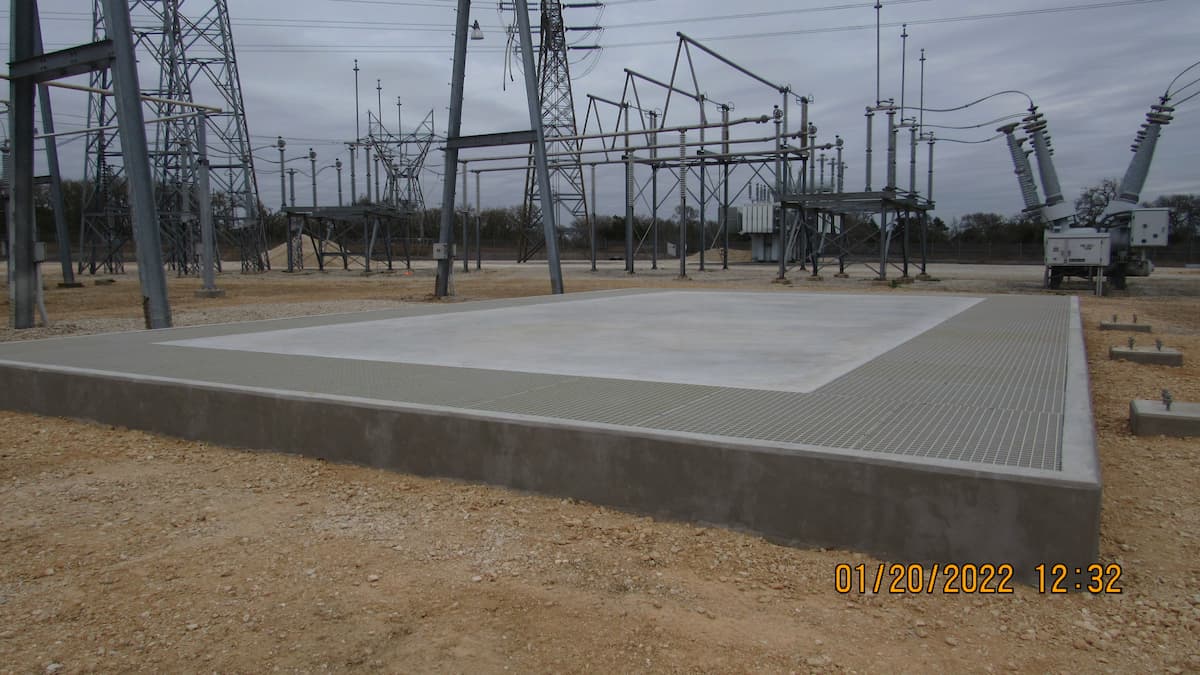
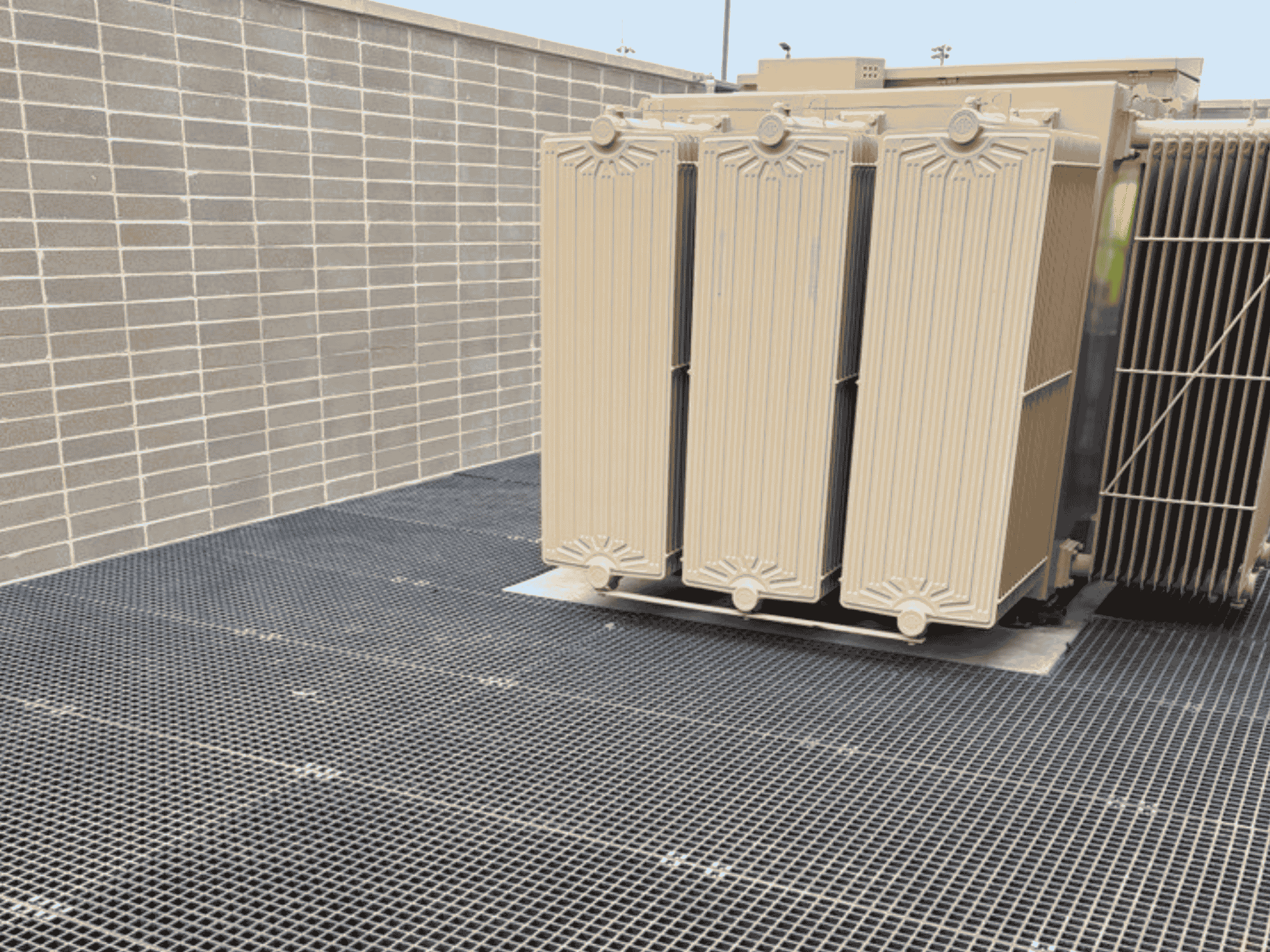
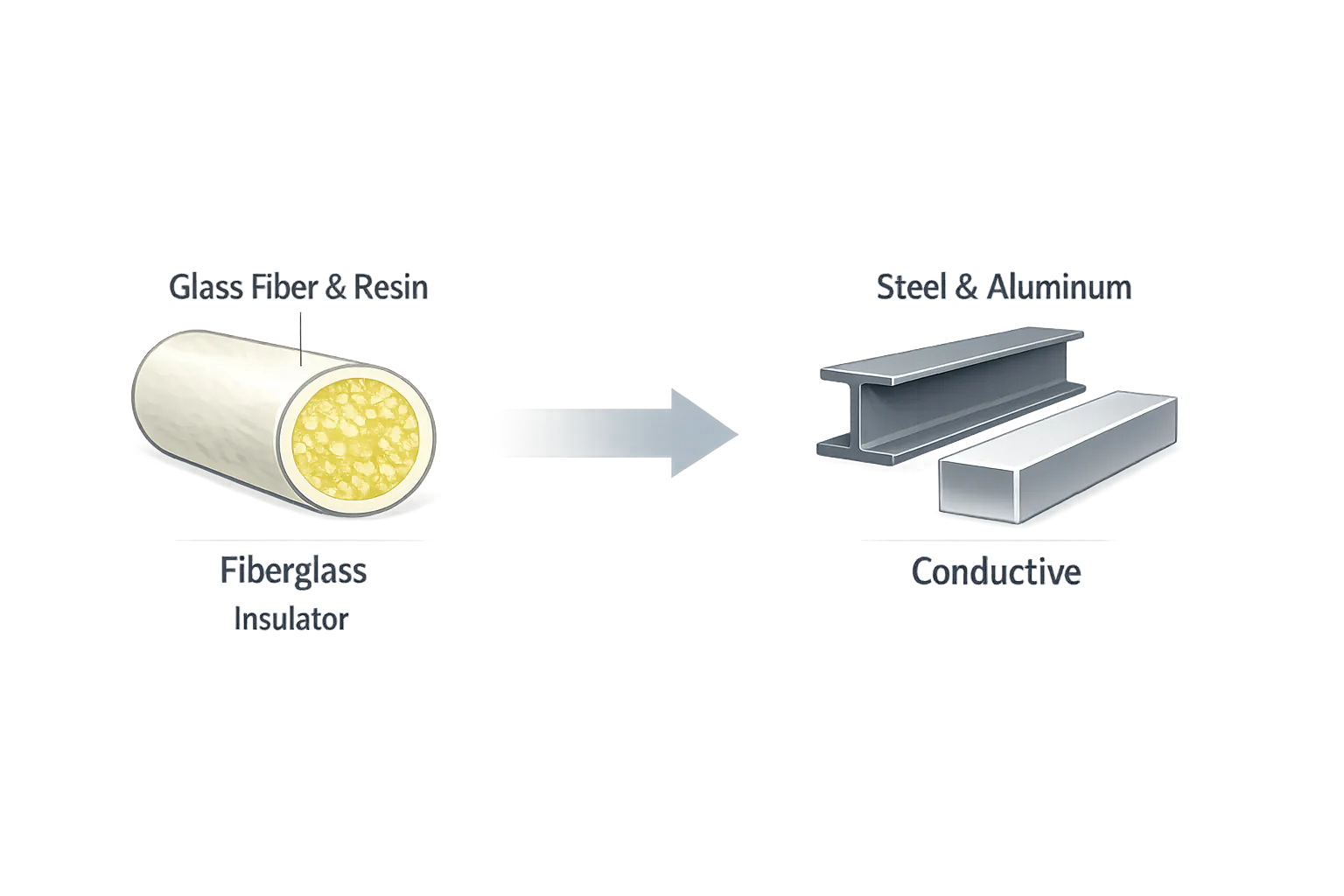
No. Fiberglass does not conduct electricity. Both the glass fibers and the resin matrix used to make fiber-reinforced polymer (FRP) are naturally non-conductive, which is why FRP is the go-to replacement for steel and aluminum around live power, substations, and other electrical hazard areas.
Check out our Substation/Transformer Brochure for product specs built around this exact requirement.
Why Fiberglass Is Non-Conductive
Glass itself is an electrical insulator at the molecular level, and the thermoset resins used to bind fiberglass together are non-conductive too. Peer-reviewed materials science backs this up directly: a 2021 study published in Materials states plainly that “glass fiber-reinforced plastic (GFRP) is originally an electrically non-conductive structural composite,” and that conductivity only appears when manufacturers deliberately add conductive fillers like carbon nanotubes to the matrix (Stankevich et al., 2021).
Fiberglass is also non-magnetic and largely transparent to radio and cellular signals, which is why it shows up in cell tower screening as well as electrical work.
It’s worth separating two different properties people often mix up:
Electrical conductivity, the ability to carry electric current. Standard fiberglass is non-conductive.
Thermal conductivity, the ability to transfer heat. Fiberglass is also a poor thermal conductor, which is a separate benefit (it doesn’t need extra insulation against heat transfer the way bare metal structures sometimes do).
When Fiberglass Can Become Conductive
Fiberglass’s insulating value isn’t unconditional, and a complete answer has to cover the exceptions. Three situations reduce or remove it:
Surface contamination. Dust, grease, salt spray, or metallic particles combined with humidity can form a conductive film on the surface of fiberglass. This is a maintenance issue, not a material defect, but it’s the most common way an insulating FRP part becomes a hazard in the field.
Carbon fiber hybrids. Products that blend carbon fiber into the layup are not fully non-conductive, carbon fiber is itself a high-performance conductor, so any carbon content changes the electrical rating of the part.
Engineered exceptions. As the PMC study above confirms, manufacturers can intentionally add conductive fillers (like carbon nanotubes) to fiberglass composites for specialty applications such as structural damage sensing. These are purpose-built exceptions, not standard structural FRP.
Standard structural FRP, the grating, profiles, handrails, and platforms DEFI fabricates, uses glass fiber reinforcement with no conductive additives, so none of these exceptions apply to our products.
How DEFI Uses Non-Conductive FRP
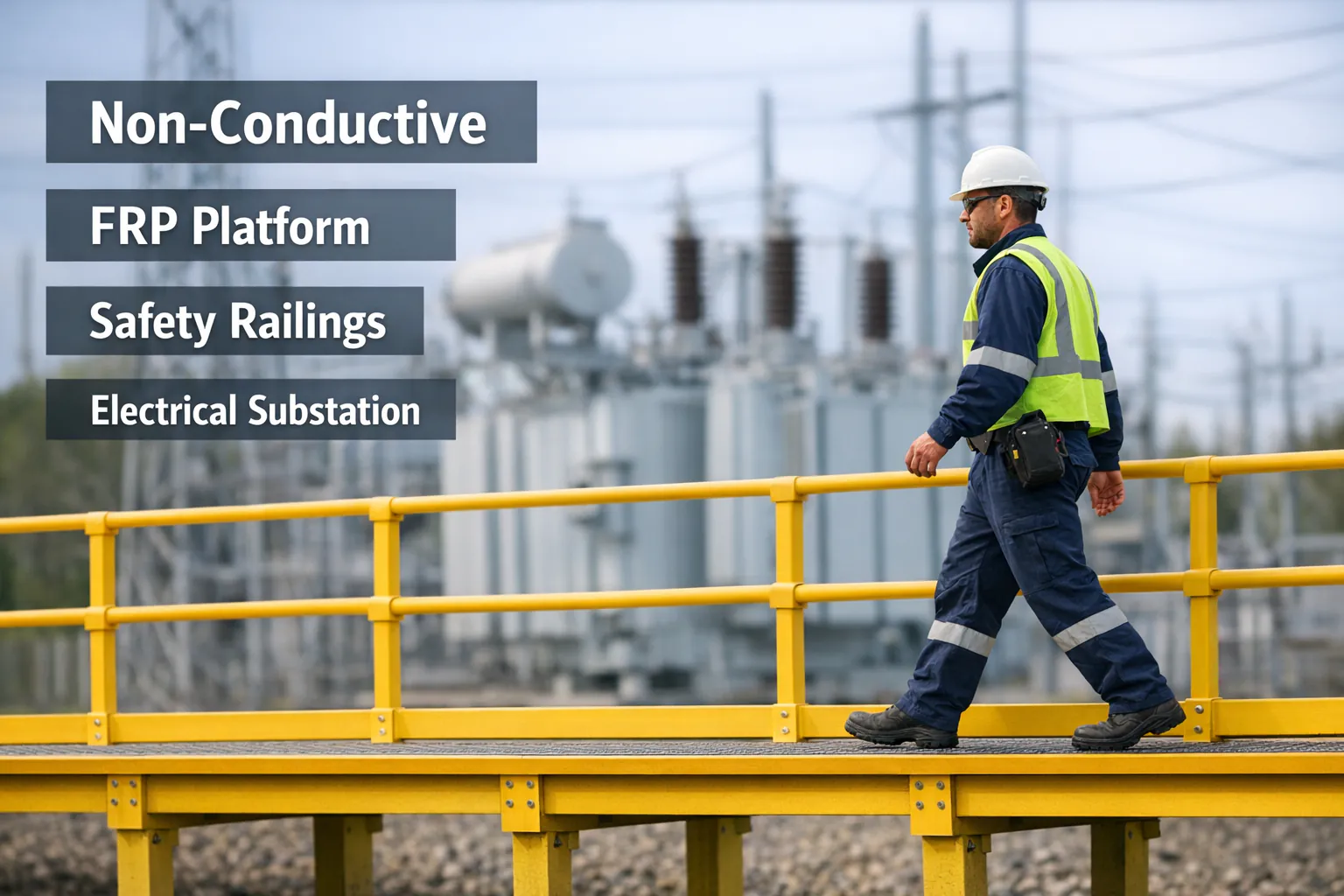
Increases Safety. Unlike metal, FRP does not conduct electricity, reducing the risk of shocks and other hazards when working around energized equipment. This makes FRP and fiberglass a strong fit for structures used in data centers, battery storage, generator areas, and electrical substations. See how this plays out in practice in our breakdown of steel vs. FRP for data centers.
No Need for Grounding. Metal platforms, stairs, and other structures have to be grounded to prevent shocks. FRP structures don’t require grounding, which lowers installation cost, increases worker safety, and reduces ongoing maintenance. It’s one of several reasons engineers choose FRP over steel for electrical-adjacent builds.
Pairs with the rest of the structure. Non-conductive properties aren’t limited to one product line, DEFI applies the same glass fiber and resin systems across structural FRP profiles and handrails, so an entire platform, stair, or walkway near live electrical equipment can be built non-conductive from the deck to the rail, not just one component of it.
Fiberglass vs. Metal: Electrical Risk at a Glance
Material | Conducts electricity? | Needs grounding? |
|---|---|---|
Steel | Yes | Yes |
Aluminum | Yes | Yes |
Standard structural FRP (fiberglass) | No | No |
Carbon-fiber-hybrid composite | Yes (partially) | Depends on carbon content |
FAQ
Does fiberglass conduct electricity?
No. Standard fiberglass, made from glass fibers and a resin matrix, is classified as a non-conductive, electrically insulating material.
Is fiberglass conductive under any conditions?
Only in edge cases: surface contamination (dust, moisture, salt) can create a conductive film, and composites that blend in carbon fiber or engineered conductive fillers are not fully non-conductive. Clean, standard structural FRP has none of these additives.
Does FRP need to be grounded like steel?
No. Because it doesn’t conduct electricity, FRP structural framing, grating, and handrails don’t require grounding, unlike steel or aluminum equivalents.
Why does this matter for data centers and substations?
Electrical hazard areas need materials that won’t carry a shock if energized equipment is damaged or shorts. Non-conductive FRP removes that risk entirely for the structure itself, which is why it’s increasingly specified for data centers, battery storage, and substation platforms.