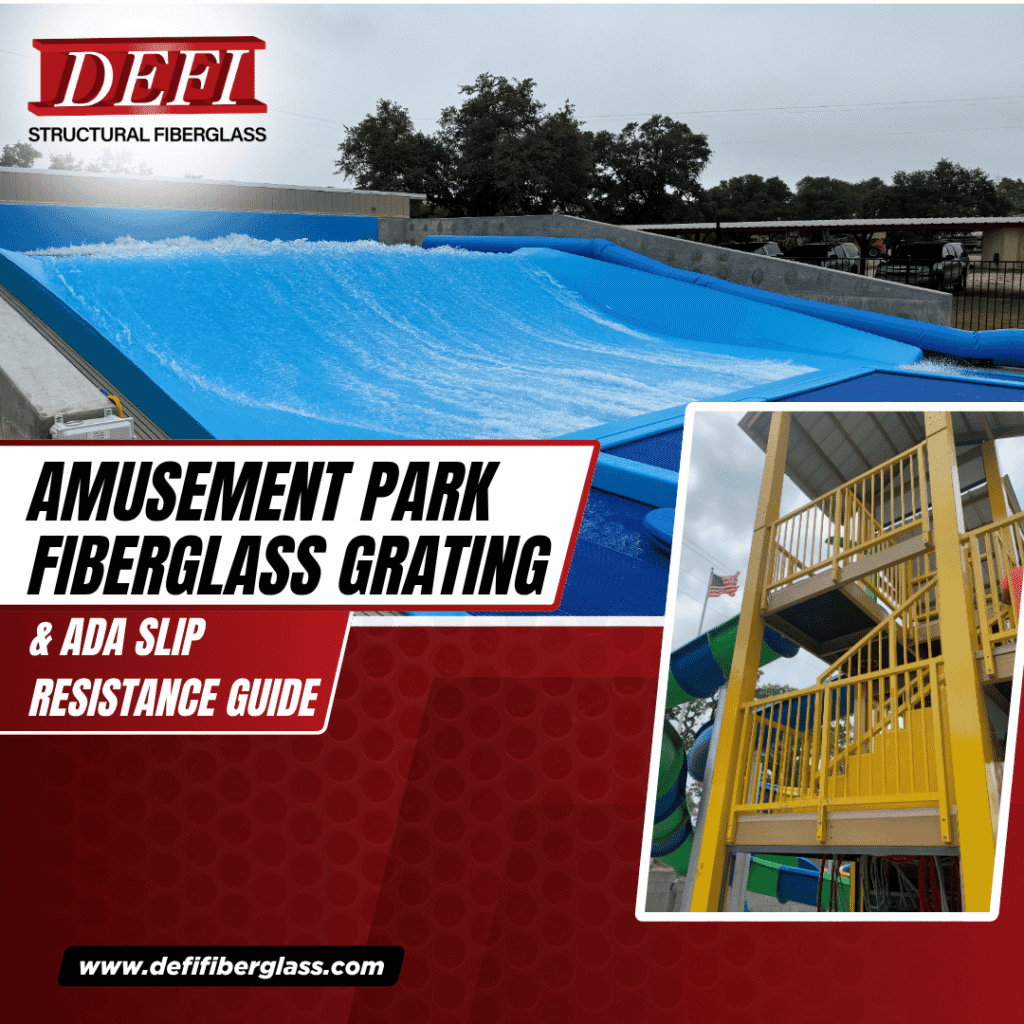
Amusement park fiberglass grating is molded or pultruded FRP decking with a built-in grit-top surface, available in several grid configurations and resin systems, used on access towers, slide platforms, trench drains and queue walkways because it resists chlorine and weather while staying slip-resistant for bare and wet feet. These FRP grating products meet ADA’s accessibility rules by keeping openings at or under ½ inch and testing to a static coefficient of friction of 0.6 or higher on level surfaces, unlike the steel and aluminum materials they replace.
Key takeaways:
ADA’s enforceable standard requires surfaces to be “stable, firm, and slip resistant” but sets no numeric friction value, per the U.S. Access Board. The 0.6 static coefficient of friction figure is the industry benchmark manufacturers test FRP grating products against.
Openings in ADA-compliant grating can’t let a ½-inch sphere pass through, and elongated openings must run perpendicular to the main direction of foot traffic.
Fiberglass grating resists chlorine, saltwater and UV far better than steel or aluminum around wet-deck attractions.
DEFI’s pultruded FRP grating ships with a grit-top anti-skid surface as standard, available in multiple colors, and its DEFI 10-40, 15-40 and 10-18 panels are VGBA-compliant for pool and splash-park drainage systems.
Independent lab testing under ASME A112.19.8a, Section 3.2 gave DEFI’s pultruded grating a K factor of 1.1 for UV resistance on pool drain covers.
What Makes Fiberglass Grating ADA Compliant
A grating panel is ADA compliant when its openings, surface and installation orientation all meet the Access Board’s accessible-route rules. There’s no single “ADA-approved” stamp; compliance comes from how the panel is specified and installed, and the same rule applies across FRP grating products regardless of application, whether it’s a slide-tower stair tread or a queue-line walkway.
Three things matter most:
Opening size. Grates can’t allow a sphere larger than ½ inch in diameter to pass through, per the Access Board’s floor and ground surface guide.
Orientation. Where openings are elongated, the long dimension must sit perpendicular to the dominant direction of travel. On a switchback ramp up to a slide tower, that means the bearing bars run across the walkway, not along it.
Slip resistance. The standards themselves don’t name a minimum coefficient of friction, because no single test method has become the accepted one, the Access Board notes. In practice, suppliers test to and advertise a static coefficient of friction of at least 0.6 on flat ground and 0.8 on ramps.
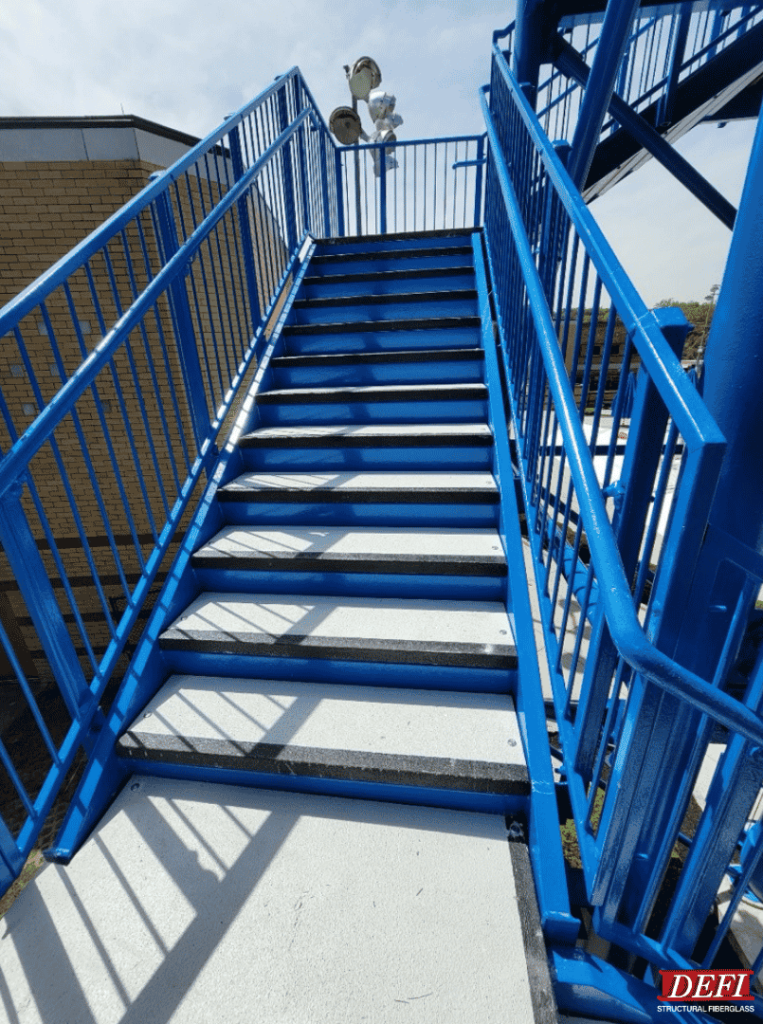
Molded fiberglass grating with a square grid and no elongated openings, clears the direction-of-travel rule automatically regardless of how it’s installed. Pultruded I-bar and T-bar grating has to be laid with the bearing bars crossing the path of travel to qualify.
Why Parks Choose FRP Over Steel or Aluminum
Amusement and water parks pick fiberglass grating because it survives constant moisture, chemical exposure and foot traffic without the corrosion and conductivity problems metal brings to the same spots. Chlorine, salt air and standing water chew through galvanized steel in a few seasons; FRP doesn’t react with any of them.
That durability shows up in a few concrete ways:
Corrosion resistance. Vinyl ester resin grating withstands constant sun and pool chemicals for up to 25 years, roughly double the service life of comparable metal materials in the same wet environment, according to DEFI’s waterpark fiberglass guide.
Non-conductivity. FRP grating and access-tower structures near water remove the shock risk metal carries during storms, since the resin and glass fibers don’t conduct electricity.
Grip and low maintenance. A grit top is standard, not an upgrade, on available FRP grating products, and grit can be tuned per application, coarser for shoe traffic, finer for bare feet, with little upkeep beyond a rinse.
Weight and cost. FRP grating systems install with hand tools and carry almost no scrap value, so unlike steel grating they aren’t a theft target during a park build-out.
Attribute | FRP Grating | Steel or Aluminum Grating |
|---|---|---|
Lifespan in pool/chemical exposure | Up to 25 years | Roughly 10-15 years |
Weight vs. steel | About 70-75% lighter | Baseline |
Conductivity | Non-conductive | Conductive |
Static coefficient of friction (grit top) | 0.6 or higher | Often lower once wet |
Both molded and pultruded FRP grating systems outperform painted metal materials on every row above, which is why Gulf Coast parks spec it for new builds and retrofits alike.
Where Parks Use It
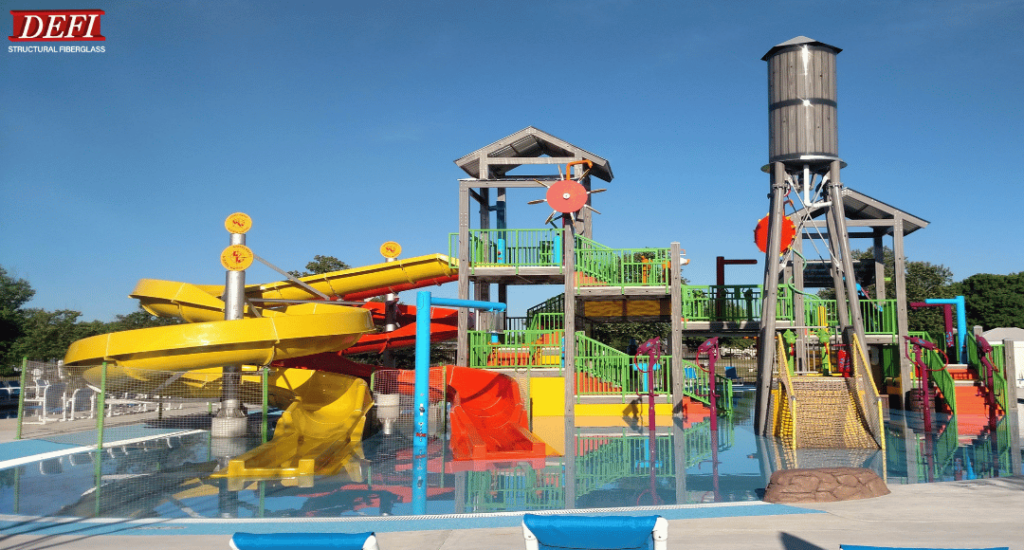
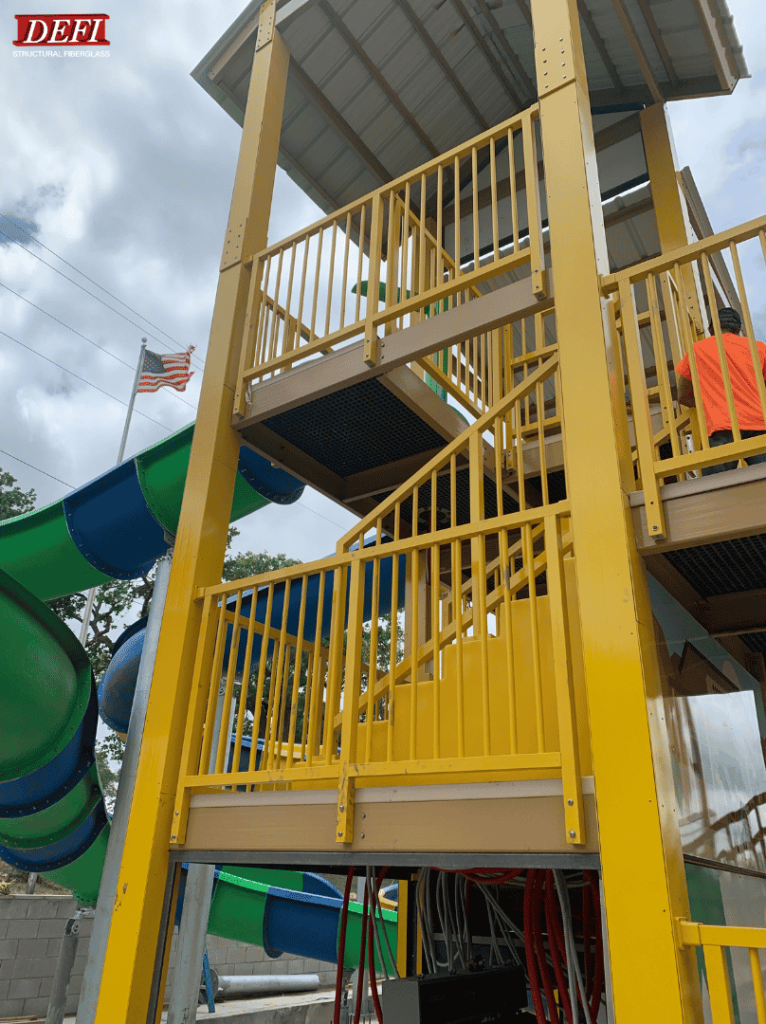
Fiberglass grating and structural FRP products show up anywhere a park combines water, chemicals and foot traffic in the same application: slide-tower stairs and landings, trench drains around wave pools, sump and pump-shack covers, queue-line walkways, locker-room floors, and picnic and concession decking, per DEFI’s waterpark applications page. An estimated 90% of the key structures at a typical waterpark use fiberglass, according to DEFI. Bright, fluorescent colors also double as a visibility cue on stairs and ramps in low light.
DEFI’s Grating Options for Park Projects
DEFI’s standard pultruded fiberglass grating ships with a grit-top anti-skid surface and is available in a range of grid configurations, resin systems, colors and panel sizes to match a park’s load and traffic requirements; molded grating is available too, for applications where a square-grid, no-elongated-opening surface fits the layout better. For pool decks, slide platforms and splash-park drainage specifically, the DEFI 10-40, 15-40 and 10-18 panels are built to meet VGBA compliance for drain covers, a requirement under the Virginia Graeme Baker Pool and Spa Safety Act for any grate covering a pool suction outlet.
Independent lab testing under ASME A112.19.8a, Section 3.2 gave DEFI’s pultruded grating a K factor of 1.1 for UV-exposure resistance on pool drain covers, which matters since UV-degraded grating loses strength before it visibly looks worn. For areas where fire performance matters more than pool compliance, such as mechanical rooms or evacuation platforms near slide towers, DEFI’s pultruded phenolic grating adds low-smoke, low-toxicity fire resistance on top of the same anti-slip surface. Both product lines pair with DEFI’s structural fiberglass shapes for the stair stringers, handrails and platform framing around the grating itself, framing that weighs about a third of steel and ships from either DEFI’s Houston or Lafayette plants.
Maintenance and Lifespan
Fiberglass grating needs little maintenance beyond periodic rinsing to clear debris from the grid openings. Because it doesn’t rust, pit or require repainting, unlike comparable metal materials, a panel over a trench drain or pump shack typically stays in service for a decade or more without a recoating cycle. Damaged panels bolt in rather than weld in, so a single section swaps out without shutting down the whole walkway.
FAQ
Is fiberglass grating ADA compliant?
It can be, when the openings are ½ inch or smaller, elongated openings run perpendicular to the dominant direction of travel, and the surface is slip-resistant, per the Access Board’s standards. Molded FRP grating with a square grid clears the orientation rule regardless of installation direction.
What coefficient of friction does ADA require for grating?
The enforceable ADA standards don’t set one. Manufacturers commonly test to and market a static coefficient of friction of at least 0.6 on level surfaces and 0.8 on ramps as the working industry benchmark.
Why do amusement and water parks use fiberglass grating instead of steel?
Fiberglass doesn’t corrode in chlorinated or salt water, doesn’t conduct electricity near wet attractions, and keeps its grip even when wet or oily, where galvanized steel rusts, gets slick, and can carry a shock risk around access towers.
What is VGBA-compliant grating and why does it matter for parks?
VGBA compliance refers to the Virginia Graeme Baker Pool and Spa Safety Act, which sets requirements for covers over pool suction drains to prevent entrapment. DEFI’s 10-40, 15-40 and 10-18 grating panels are built to meet that standard for pool and splash-park drainage.
How long does fiberglass grating last at a water or amusement park?
Vinyl ester resin grating can hold up to constant sun and pool-chemical exposure for up to 25 years, roughly double what metal grating typically manages in the same conditions, per DEFI’s waterpark FRP guide.
Can fiberglass grating be customized for grip or color?
Yes. Grit texture can be specified coarser for shoe traffic or finer for bare feet, and panels are commonly produced in bright or fluorescent colors to improve visibility on stairs and ramps in low-light areas.
Does fiberglass grating need special tools to install or repair?
No. FRP grating can be cut and fitted with standard hand tools and is light enough for a two-person crew to carry and set, which keeps repair and replacement fast compared to welding in a new steel panel.
Check out our resources page here.
Follow us on LinkedIn!