How Strong Is Fiberglass? Strength, Weight & Steel Comparison
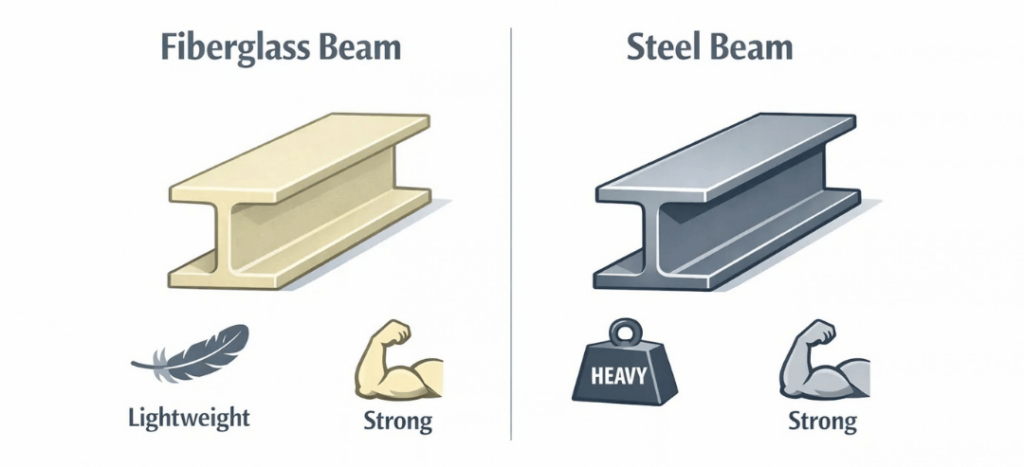
Pound for pound, fiberglass is just as strong as steel, and in some directions it’s stronger. A quarter-inch steel beam doesn’t translate to a quarter-inch fiberglass beam; you go a little deeper and thicker on the structural member to match steel’s load capacity, but you get there at roughly a quarter of the weight.
That’s the direct answer DEFI gives buyers every time this comes up, and it holds up against the published material data below.
Key takeaways
Fiberglass (FRP) tensile strength runs 2,000-3,500 MPa for the reinforcing glass fiber itself, versus roughly 400-550 MPa (about 60,000 psi) for structural steel, per Wikipedia’s materials data.
In finished pultruded parts, fiberglass composite is commonly rated around 4x steel’s tensile strength on a like-for-like basis.
Fiberglass weighs about 25% of steel for the same part, so it’s strong but not heavy relative to its strength.
Fiberglass is a composite, not a metal: glass fibers bound in a polymer resin, which is why it doesn’t conduct electricity or corrode like steel.
Steel still wins on raw rigidity and upfront cost per pound, but loses on corrosion, weight, and lifetime cost in harsh environments.
How strong is fiberglass, really?
Fiberglass is strong enough to match or exceed structural steel on a strength-to-weight basis. Steel’s tensile strength tops out around 60,000 psi (roughly 400-550 MPa for common structural grades). The glass fiber reinforcement inside fiberglass composite tests at 2,000 to 3,500 MPa, according to Wikipedia’s materials table for fiberglass, which also notes fiberglass is “stronger than many metals by weight, non-magnetic, non-conductive.”
That gap narrows once the glass fiber is combined with resin into a finished structural profile, since the resin matrix and fiber orientation both affect real-world performance. A separate engineering study on FRP rebar found a longitudinal tensile strength of 1,000 MPa for fiberglass rebar against 550 MPa for steel.
For applications needing maximum compressive strength alongside corrosion resistance, DEFI engineers adjust resin content and fiber orientation per project rather than relying on a single off-the-shelf profile.
Property | Fiberglass (FRP) | Steel |
|---|---|---|
Tensile strength | 1,000-3,500 MPa | 250-550 MPa (~60,000 psi) |
Density | ~2,000 kg/m³ | ~7,800 kg/m³ |
Relative weight (same part) | ~25% of steel | Baseline |
Corrosion resistance | Yes | No (rusts, pits) |
Electrical conductivity | Non-conductive | Conductive |
E-modulus (stiffness) | ~54 GPa | ~200-210 GPa |
Sources: Wikipedia
Steel does keep the edge on stiffness (E-modulus), which is why fiberglass structural members are engineered a bit deeper or thicker than the steel shape they replace. That’s a design adjustment, not a weakness: our fiberglass beam guide walks through how DEFI sizes FRP profiles to match steel’s load ratings.
Fiberglass is also cheaper and more flexible than carbon fiber composites, though carbon fiber has a higher strength-to-weight ratio at a much steeper price, per Wikipedia’s comparison. Steel can still edge out fiberglass on raw compressive strength in some rigid-frame designs, but fiberglass’s corrosion resistance and lighter weight usually outweigh that difference in wet, chemical, or offshore environments.
Fiberglass vs. steel: strength-to-weight is the real story
Raw tensile numbers only tell half the story. What matters on a job site is strength-to-weight, and that’s where fiberglass pulls ahead by a wide margin. A fiberglass part delivers steel-equivalent strength at roughly a quarter of the weight, and it’s stronger than steel in the lengthwise (longitudinal) direction, which is why it performs well in load-bearing spans like loading ramps, catwalks, and platforms.
That strength-to-weight advantage is also why fiberglass shows up in aircraft, boats, and automotive panels: applications where every extra pound of steel has to be justified.
Is fiberglass heavy?
No. Fiberglass is light for its strength, weighing about a quarter of steel for an equivalent part. Density for finished FRP composite runs around 2,000 kg/m³ versus roughly 7,800 kg/m³ for steel; per Wikipedia lists fiberglass density at 1.5-2.5 g/cm³ depending on resin and glass content, still a fraction of steel’s.
That lighter weight cuts real costs beyond the material price. Lighter shipments mean lower freight bills, structures need less concrete reinforcement to carry the load, and crews can often install fiberglass grating and profiles with hand tools instead of heavy lifting equipment.
Is fiberglass a metal?
No, fiberglass is not a metal. It’s a composite material: glass fibers embedded in a polymer resin matrix, most often polyester, vinyl ester, or epoxy. That composition is exactly why fiberglass behaves so differently from steel or aluminum in the field. It’s non-conductive, non-magnetic, and chemically inert against most corrosive substances, none of which is true of a metal.
The tradeoff is that fiberglass isn’t ductile the way metal is; it doesn’t bend and reform under stress the same way. Instead it flexes elastically and returns to shape, which is part of why it resists denting and impact damage better than rigid steel.
The disadvantages of steel that fiberglass solves
Steel’s tensile strength is real, but so are its structural liabilities in industrial settings. These are the reasons DEFI customers switch:
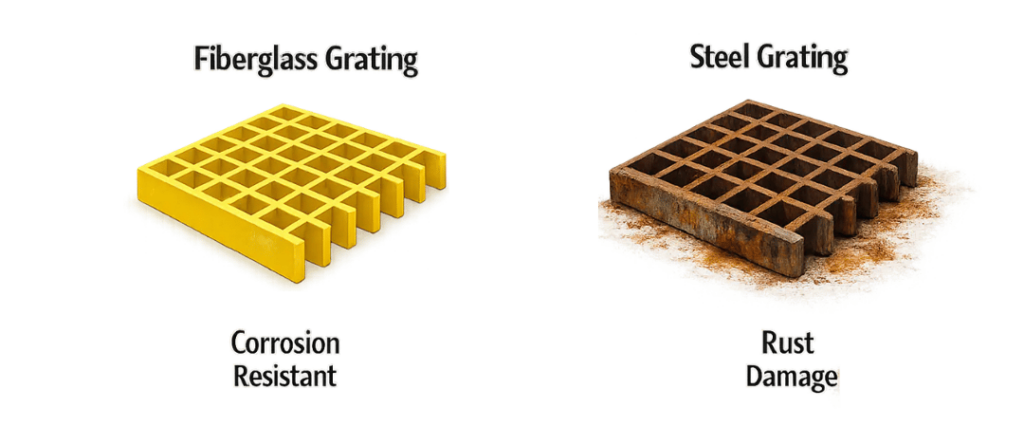
Prone to corrosion. Even stainless steel corrodes when exposed to reactive chemicals and moisture. Sulfuric acid, saltwater, and other industrial substances can corrode steel quickly, and corroded steel loses load capacity, sometimes catastrophically. DEFI once replaced steel grating for a water treatment client after an employee stepped through a corrosion hole and was seriously injured; the plant switched entirely to DEFI fiberglass grating afterward.
Expensive, and getting more so. Steel grating routinely runs $400+ per square foot, and tariffs and supply pressure have pushed steel costs higher in recent years. Fiberglass may cost more upfront but needs less maintenance and lasts longer in corrosive environments, which is where the total cost advantage shows up.
Not enough flex. Steel’s rigidity is a double-edged sword: strong, but prone to denting on impact and often requiring reinforced concrete foundations to carry its weight. Fiberglass flexes and rebounds, and its lighter weight means less foundation work.
Highly conductive. Steel conducts electricity, a real hazard in chemical plants, water treatment facilities, and waterparks where shock risk is already elevated. Fiberglass is non-conductive by nature, which is also why FRP is considered the safest ladder material to use around electricity.
How to spot corroded steel before it fails
You don’t need to overhaul an entire plant at once. If you know the warning signs, you can replace the worst sections with fiberglass first and phase the rest in over time.
Severe rust: red or brown oxide buildup from electrolyte exposure (saltwater, humidity); it eats through steel layer by layer.
Pitting: small surface holes, similar to how corrosion works its way in, that expand and eventually fracture the steel.
Flaking and thinning: once rust sets in fully, steel layers flake off, leaving thin, structurally compromised spots.
Due diligence: inspect more frequently in areas with known corrosive exposure, saltwater, acids, or excess moisture accelerate the timeline.
Get stronger and lighter with fiberglass from DEFI
DEFI’s FRP products deliver steel-equivalent strength without steel’s corrosion, weight, or conductivity risks. A few specifics beyond the strength numbers above:
More economical over time. Higher initial cost, but no reinforced foundations, no heavy installation equipment, and near-zero maintenance once installed.
More versatile. Fiberglass works in electrical plants and offshore platforms where steel simply can’t be used safely, and see our FRP vs. steel comparison for a full side-by-side.
Lower shipping costs. Lighter product means cheaper freight from either DEFI’s Houston or Lafayette plants.
No shock hazard. Facilities running more electronics, robotics, and automated equipment than ever face growing electrical risk with steel; fiberglass removes that risk entirely.
Contact DEFI today to see how switching to fiberglass can improve safety, cut long-term costs, and outperform steel in your facility.
FAQ
How strong is fiberglass compared to steel?
Fiberglass matches or exceeds steel’s tensile strength on a strength-to-weight basis. Structural steel tops out near 60,000 psi (roughly 400-550 MPa), while glass fiber reinforcement tests at 2,000-3,500 MPa and finished FRP composite is commonly benchmarked at around 4x steel’s tensile strength. Fiberglass is also stronger than steel in the lengthwise direction, which suits load-bearing spans.
Is fiberglass strong?
Yes. Fiberglass is engineered specifically for strength in structural and industrial applications, offering steel-equivalent load capacity at about a quarter of the weight, plus better impact resistance from its ability to flex without denting.
Is fiberglass heavy?
No, fiberglass is comparatively light. It weighs roughly 25% of steel for an equivalent structural part, with a density near 2,000 kg/m³ versus steel’s roughly 7,800 kg/m³.
Is fiberglass a metal?
No. Fiberglass is a fiber-reinforced polymer composite: glass fibers set in a resin matrix. It is non-conductive and non-magnetic, unlike any metal, which is why it’s preferred in electrical and corrosive environments.
What is fiberglass’s strength-to-weight advantage over steel?
Fiberglass delivers equivalent or greater strength at roughly a quarter of steel’s weight, which is why it’s increasingly used for loading ramps, catwalks, platforms, and offshore structures where every pound of dead load matters.
Does fiberglass corrode like steel?
No. Fiberglass resists corrosion from moisture, saltwater, and most industrial chemicals, while steel, including stainless grades, corrodes under the same exposure. That’s the leading reason industrial facilities switch structural materials.
Is fiberglass grating as strong as steel grating?
Yes, fiberglass grating built to the same load specification performs comparably to steel grating while weighing far less and resisting corrosion. See our fiberglass grating vs. steel breakdown for load-rating specifics.