A petrochemical (sometimes written petro chemical) is a chemical compound made from crude oil or natural gas rather than plants or animals. The industry took root in the United States in the 1920s and now anchors chemical manufacturing worldwide. Refineries and crackers break hydrocarbons into building blocks like ethylene, propylene, and benzene, then combine them into plastics, resins, solvents, and thousands of everyday products.
Key takeaways
Petrochemicals come from two feedstocks: natural gas liquids (ethane, propane, butane) and naphtha from crude oil, according to the American Fuel & Petrochemical Manufacturers (AFPM).
Cracking converts these feedstocks into six core building blocks: ethylene, propylene, butylene, benzene, toluene, and xylene.
Those building blocks become derivatives (ethylene glycol, styrene, acrylonitrile) and finally consumer products like LDPE and HDPE plastics, coatings, and synthetic fibers.
The plants that produce petrochemicals run some of the most corrosive, highest-stakes environments in industry, which is why material choice for grating, platforms, and walkways matters as much as the chemistry itself.
Corrosion alone costs the global economy roughly $2.5 trillion a year, about 3.4% of world GDP, per the NACE International IMPACT study.
“Ethane is first converted to ethylene using a process called cracking… physics then takes over, and the carbons form two bonds with each other that make a new hydrocarbon molecule.”, AFPM
What Is a Petrochemical, Exactly?
A petrochemical is any chemical derived from petroleum or natural gas, per Merriam-Webster’s definition. Wikipedia’s overview of the petrochemical industry groups the family into two broad classes: olefins and aromatics, plus the plastics, rubbers, and fibers made from them. Study.com’s industry primer adds a third practical category: raw materials refiners sell directly, such as waxes and lubricants.
The industry started small in the early 1900s, grew fast in the 1920s with companies like Standard Oil and DuPont entering the space, and expanded rapidly during World War II under wartime chemical demand, according to Chandra Asri Group’s overview of the industry. Today petrochemicals sit behind fuel additives, cosmetics, medicines, and most plastic packaging on store shelves.
Chemists generally split the petrochemical family into two working groups. Olefins (ethylene, propylene, butylene) are unsaturated hydrocarbons that become plastics and synthetic rubber. Aromatics (benzene, toluene, xylene) are ring-shaped hydrocarbons that become nylon, styrene, and solvents. Most large petrochemical complexes run olefins and aromatics units side by side, feeding both product families from the same site.
Two raw materials feed nearly every petrochemical plant: natural gas liquids and naphtha split off from crude oil during refining. Both are cracked apart to build new molecules through an energy-intensive manufacturing process, per AFPM. EBSCO’s research primer on petrochemical products notes that petrochemical industries now supply raw materials to nearly every other manufacturing sector, from construction to electronics.
How Petrochemicals Are Made
The short version: feedstock goes in, a cracker breaks its hydrogen-carbon bonds with heat, and the pieces reassemble into new molecules that become plastics and chemicals.
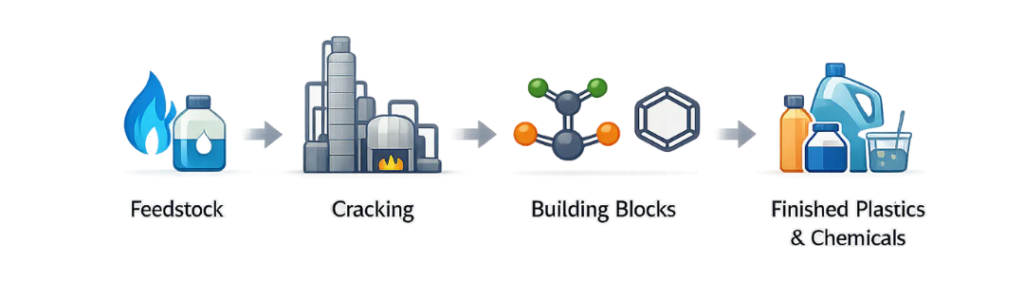
Feedstock arrives. Natural gas liquids (ethane, propane, butane) or crude-oil naphtha reach the plant.
Cracking. High heat breaks the hydrocarbon bonds. Ethane converts to ethylene; propane and butane convert to propylene and butylene, per AFPM.
Building blocks form. Ethylene, propylene, and butylene are the core olefins; benzene, toluene, and xylene (the “BTX” group) are the core aromatics. Together, these six fundamental petrochemicals, plus butadiene as a related olefin, feed nearly every derivative chemical downstream.
Derivatives and products. These combine into derivative chemicals like ethylene glycol and styrene, then into finished plastics such as LDPE and HDPE, resins, and synthetic fibers.
Building block | Made from | Typical end products |
|---|---|---|
Ethylene | Ethane (cracked) | LDPE/HDPE plastics, antifreeze, polyester |
Propylene | Propane (cracked) | Packaging, automotive parts, fibers |
Benzene, toluene, xylene | Naphtha reforming | Nylon, styrene, solvents, dyes |
Butylene/butadiene | Butane (cracked) | Synthetic rubber, resins |
Energy use is heavy at every step, which is part of why the Department of Energy tracks efficiency programs for chemical and petrochemical manufacturing specifically.
Why Petrochemical Plants Are Punishing on Materials
Petrochemical processing means constant exposure to acids, solvents, hydrogen, and volatile hydrocarbons, often in Gulf Coast heat and humidity inside dense industrial complexes. Metal structures in that setting corrode faster than almost anywhere else in industry.
The chemicals, petrochemicals, and petroleum refining sector carries an estimated $1.7 billion a year in direct corrosion cost, according to a LinkedIn analysis of industry corrosion data. Globally, corrosion control practices could recover $375-875 billion a year in losses that are currently spent on repairs, replacements, and downtime, per the NACE IMPACT study.
Outokumpu’s own review of corrosion economics puts the same global figure in perspective: it exceeds the entire GDP of countries like Italy or Canada. A peer-reviewed study on corrosion in oil refining and petrochemical operations similarly finds direct and indirect corrosion costs run well beyond the price of the materials themselves once downtime and lost production are counted.
That is why walkways, stair treads, ladders, and platforms in a petrochemical facility need more than steel with a coating. Once a coating fails, corrosion moves fast on structural steel exposed to acids and solvents, and a corroded grate or handrail is a safety hazard before it is a maintenance line item.
Where FRP Fits in a Petrochemical Facility
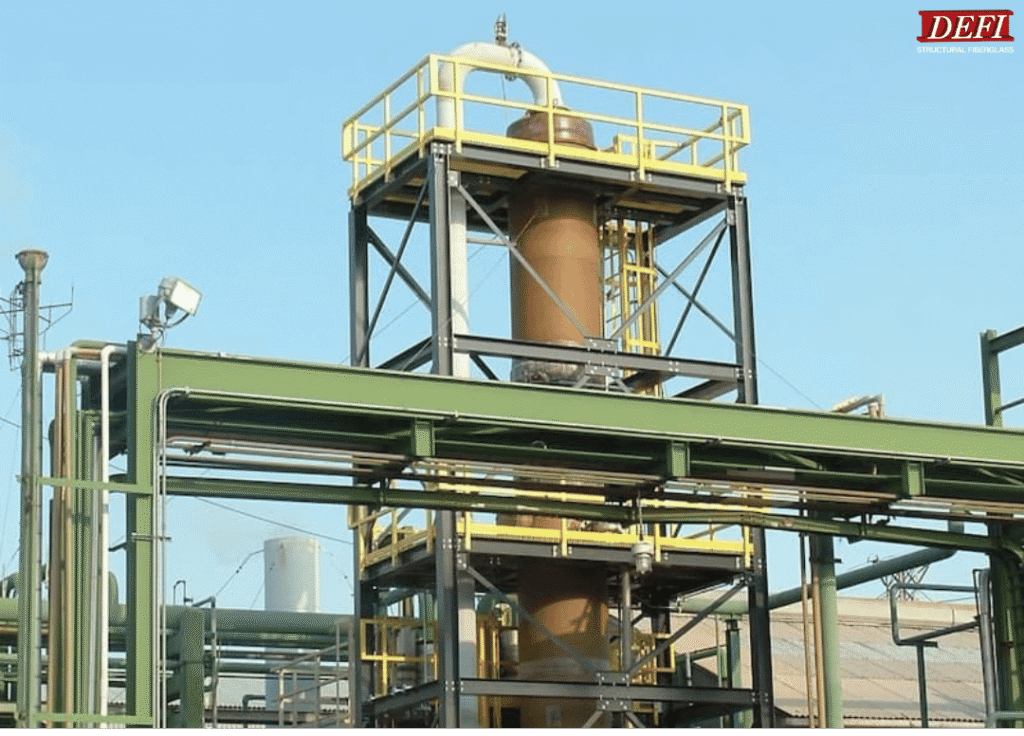
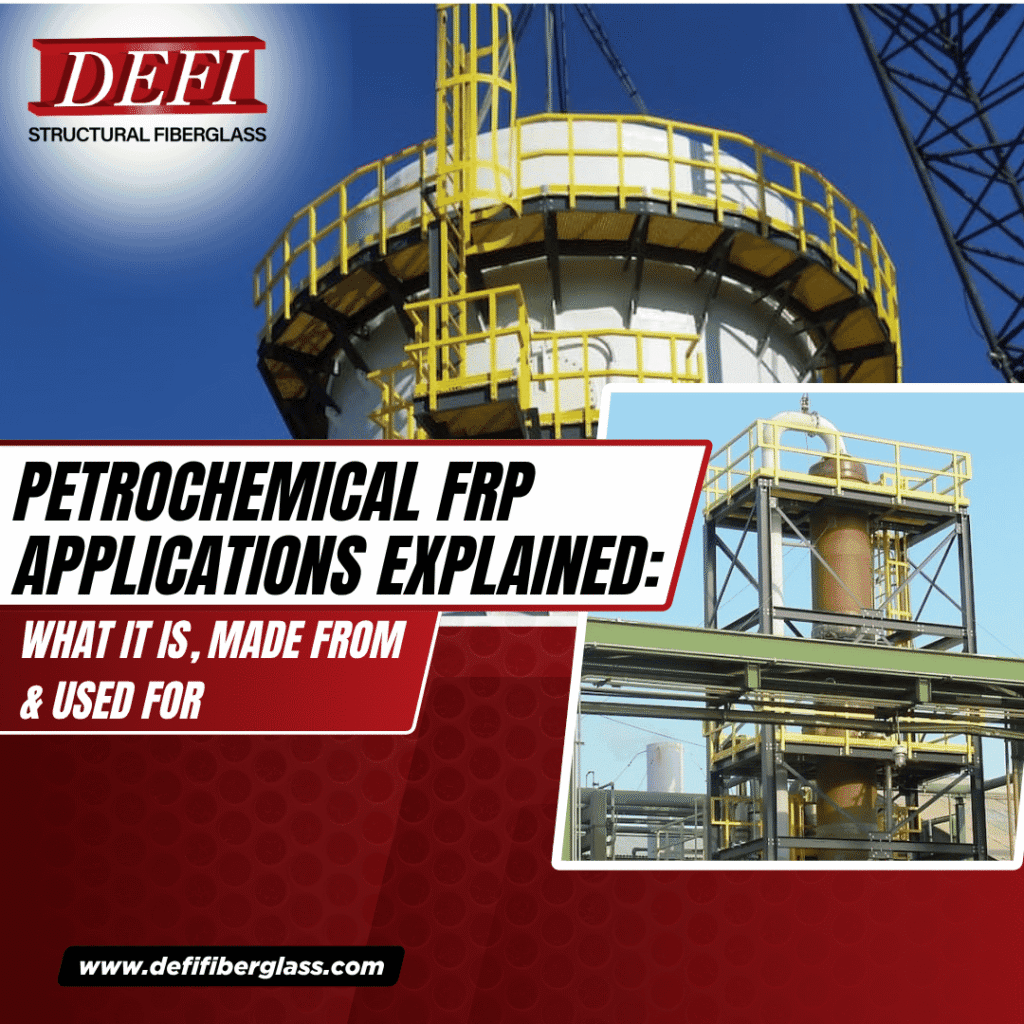
Fiber-reinforced polymer (FRP) does not rust, so it holds up in the same chemical exposure that eats steel. DEFI Fiberglass builds FRP skids, platforms, structures, trench grating, walkways, handrails, ladders, and stair treads specifically for petrochemical operations, and the material brings a few advantages that matter on a working plant floor:
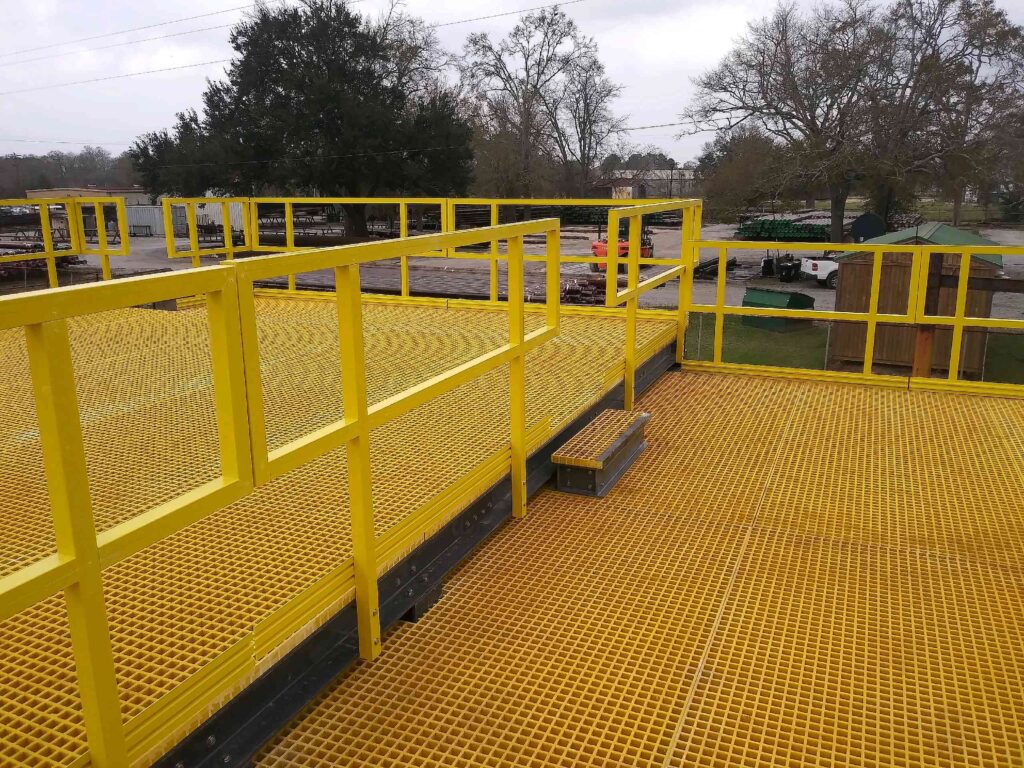
Corrosion and chemical resistance that holds up against acids, solvents, and the humid Gulf Coast air surrounding most refining and chemical hubs.
Non-conductive construction, which lowers electrical risk around process equipment; see how this plays out on the safest ladder options for facilities near live electrical systems.
High strength-to-weight ratio, so platforms and walkways carry heavy loads without adding the dead weight of steel, detailed in DEFI’s FRP vs. steel comparison.
Long, maintenance-free service life, cutting the repaint-and-replace cycle that steel structures need in corrosive service, as covered in DEFI’s look at FRP and fiberglass in oil and gas.
Fast fabrication and installation, since FRP components can be cut and assembled with standard hand tools rather than hot work.
Other suppliers across the FRP grating trade back this up. The same corrosion resistance and low conductivity when specifying grating for chemically aggressive settings. FRP’s lighter weight cuts installation labor and freight costs on top of its chemical resistance.
Petrochemical and refining sites already lean on FRP for pipe racks, biofilters, and walkways for the same reason: it is one less thing that fails when the chemistry gets aggressive.
FAQ
What is the difference between petrochemicals and petroleum?
Petroleum is the raw crude oil pumped from the ground. Petrochemicals are the chemical compounds refined and cracked from petroleum (or natural gas) into building blocks like ethylene and benzene, which then become plastics, solvents, and other products.
What are the six basic petrochemicals?
Ethylene, propylene, butylene, benzene, toluene, and xylene. AFPM calls these the fundamental building blocks because nearly every downstream plastic, fiber, and resin traces back to one of them; butadiene follows quickly downstream as an olefin derivative used mainly for synthetic rubber.
Is natural gas a petrochemical?
No. Natural gas is the raw feedstock. Its components (ethane, propane, butane) are separated out and cracked to produce petrochemicals like ethylene and propylene.
Why do petrochemical plants use fiberglass instead of steel?
FRP resists the acids, solvents, and humidity that corrode steel quickly in petrochemical service. It is also non-conductive and lighter, which lowers both electrical risk and structural load on platforms, grating, and walkways.
How much does corrosion cost the petrochemical industry?
The chemicals, petrochemicals, and petroleum refining sector runs an estimated $1.7 billion a year in direct corrosion cost, per LinkedIn’s summary of industry corrosion data, within a global corrosion bill of roughly $2.5 trillion annually reported by the NACE IMPACT study.
What products come from petrochemicals?
Plastics (LDPE, HDPE), synthetic rubber, polyester and nylon fibers, solvents, coatings, fertilizers, and components used in medicines, cosmetics, and vehicle parts all trace back to petrochemical building blocks.
The Bottom Line
Petrochemicals turn crude oil and natural gas into the plastics, fibers, and chemicals that show up in nearly everything manufactured today. The plants that make them run some of the harshest, most corrosive conditions in industry, which is exactly why the structural materials inside them deserve the same scrutiny as the chemistry.
If your facility is still specifying steel for grating, platforms, or walkways in corrosive service, request a quote from DEFI Fiberglass and compare FRP for your next petrochemical project.
Check out our resources page here.
Follow us on LinkedIn!