FRP in oil and gas means fiber-reinforced polymer gratings, platforms, handrails, pipe supports, and structural shapes used because the material resists corrosion, carries weight without conducting electricity, and shrugs off the saltwater, chemicals, and humidity that eat away at steel.
Across the oil and gas industry, it costs more upfront than plain steel in some cases, but needs no coatings, no repainting, and far less replacement over a facility’s life.
Key takeaways:
-
FRP resists corrosion, chemicals, and saltwater, which matters because corrosion alone costs the U.S. oil and gas production industry an estimated $1.372 billion a year, according to AMPP (formerly NACE International).
-
It weighs about a third as much as steel, so platforms, walkways, and pipe racks are cheaper to ship, lift, and install.
-
FRP is non-conductive, which matters directly around electrical equipment, substations, and offshore rigs where shock hazards are a constant concern.
-
Marine and offshore FRP grating has its own standards to check
-
The global oil and gas composites market is projected to grow from $2.30 billion in 2024 to $3.42 billion by 2032, per Databridge Market Research, as more operators switch from steel.
Where FRP Is Used in Oil and Gas Operations
Oil and gas sites use FRP anywhere a structure or walking surface sits in standing moisture, chemical vapor, or salt spray. These applications cover most of the facility, from the wellhead to the refinery gate.
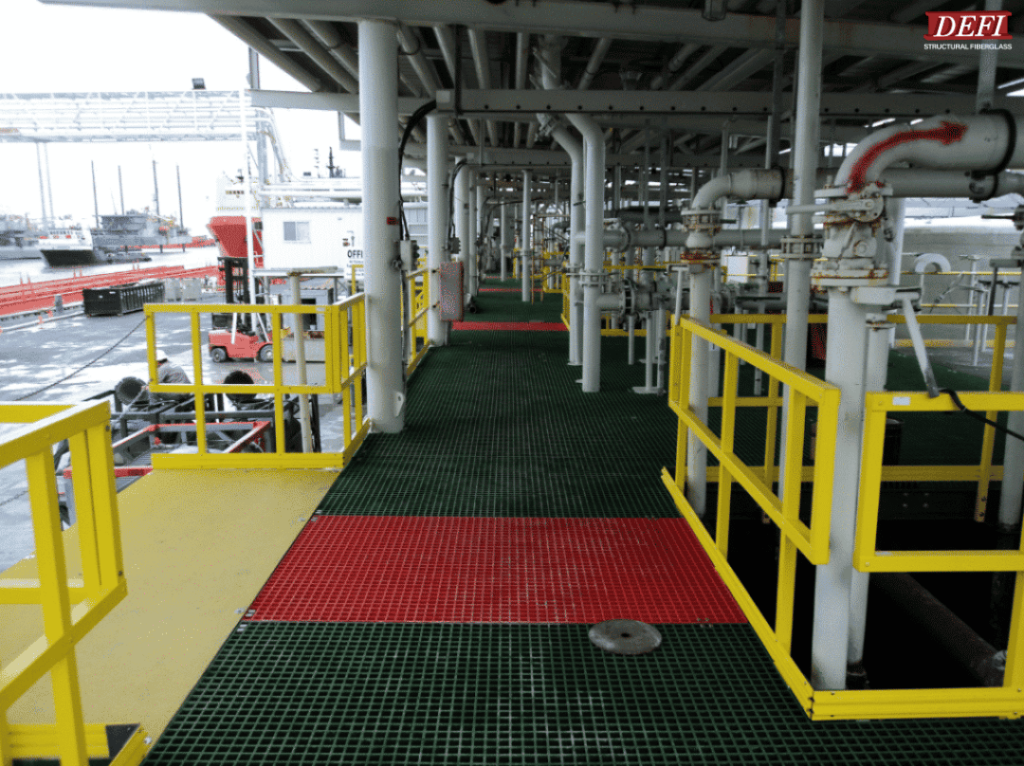
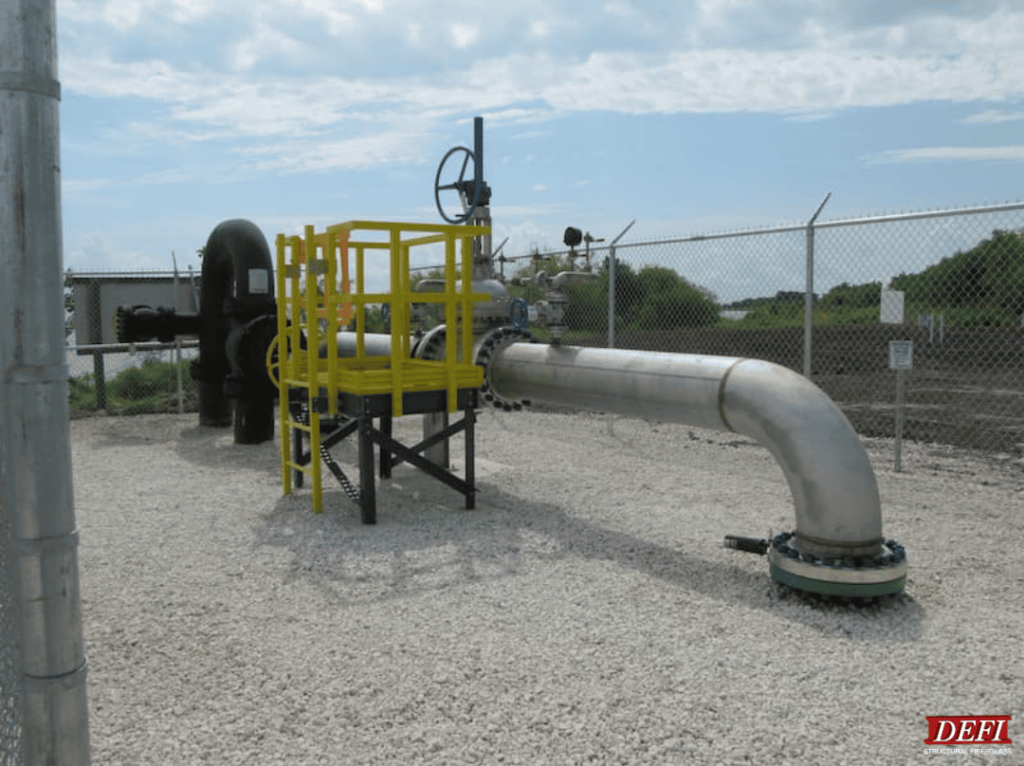
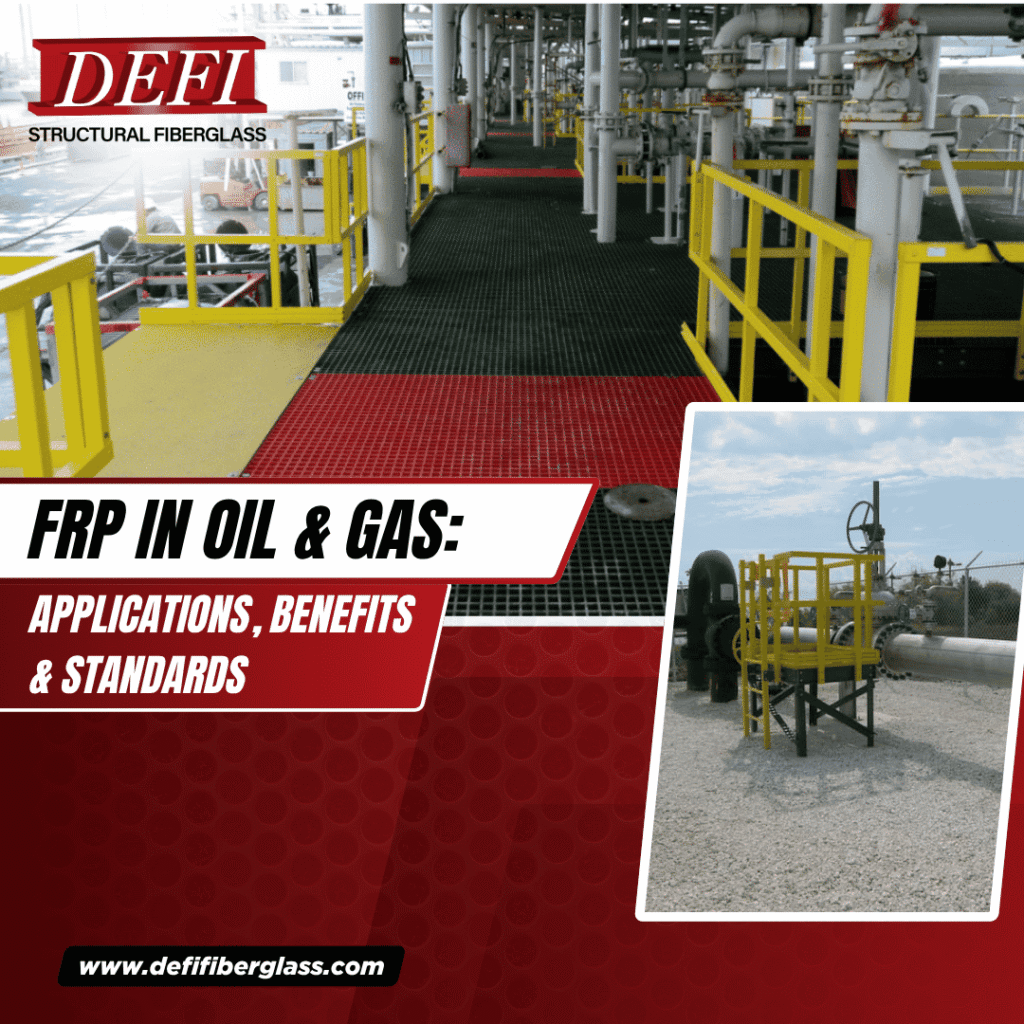
Upstream and offshore operations rely on FRP for access stairs, ladder and cage systems, and walkways on platforms and rigs, where corrosion-resistant, USCG-approved grating keeps crews safe without adding deck load. Midstream sites use covered grating materials over mud tanks and OSHA-compliant handrail systems along pipe racks and catwalks. Downstream refineries and chemical processing units lean on FRP for cable trays, pump skids, and structural framing where acid or hydrocarbon exposure would chew through unprotected steel within a few years.
FRP sleeves and coatings also protect buried and subsea pipelines from corrosion, and that fiberglass storage tanks hold up against chemicals and vapors that degrade metal tanks over time. Offshore, fiberglass enclosures and structural components resist saltwater spray and humidity better than coated steel, which is why platforms and subsea structures increasingly specify it.
Why Corrosion Resistance Matters So Much
Corrosion is not a cosmetic problem in oil and gas; it is a direct line item. AMPP’s corrosion research puts the oil and gas production industry’s annual corrosion cost at $1.372 billion, split roughly evenly between surface pipelines and facilities, and downhole tubing. Every dollar of that pays for inspection, coatings, repairs, and unplanned downtime, not new production.
FRP sidesteps most of that bill because the reinforced material itself doesn’t rust. It’s made from glass fibers set in a chemically inert resin, so it doesn’t react with crude oil, drilling fluids, bare steel pipe exposure, or the hydrogen sulfide and salt common on the Gulf Coast. Coated steel grating still needs recoating over time; FRP’s resistance is built into the material and doesn’t wear off with a few years of foot traffic.
FRP vs. Steel: A Side-by-Side Comparison
Engineers weighing FRP against steel usually compare five factors that matter most on an oil and gas site: corrosion, weight, electrical safety, maintenance, and lead time.
|
Factor |
FRP |
Steel |
|---|---|---|
|
Corrosion resistance |
Resists salt, chemicals, and moisture without coatings |
Rusts without ongoing coating and maintenance |
|
Weight |
About ⅓ the weight of steel for comparable strength |
Heavier, adds dead load to structures |
|
Electrical safety |
Non-conductive, safe near substations and electrical gear |
Conductive, requires grounding and added precautions |
|
Maintenance |
Low to none; doesn’t crack, warp, or rot |
Needs recoating, inspection, and eventual replacement |
|
Fabrication/install |
Cut with standard tools, lighter lifts, faster install |
Requires heavier equipment and welding on site |
That strength-to-weight edge is what makes FRP attractive offshore: a lighter structure cuts the load a rig or deck has to carry, and every pound shipped offshore has a cost attached.
Standards and Safety Requirements to Check
Not every FRP product is rated for every oil and gas application, so the standards attached to a given project matter as much as the material itself. Marine and offshore FRP grating used on inspected vessels, including mobile offshore drilling units, falls under U.S. Coast Guard acceptance guidance, including surface flammability and structural fire integrity.
Walking and working surfaces also fall under OSHA requirements: platforms, stair treads, and grating need to support the maximum intended load and, where processes are wet, provide drainage and adequate footing.
Market Growth and Why Operators Are Switching
Demand for composites across the oil and gas industry is rising as more operators move away from steel for new builds and replacements. Market Research Future projects the composites-in-oil-and-gas market will grow at a 4.59% CAGR from 2025 to 2035, and Databridge Market Research values the segment at $2.30 billion in 2024, climbing to $3.42 billion by 2032. The driver in both forecasts is the same: operators want lightweight, corrosion-resistant materials that cut lifetime maintenance spend, not just upfront purchase price.
Common FRP Products Used on Oil and Gas Sites
Most oil and gas FRP applications draw from a short list of reinforced materials and product types rather than one-off custom parts, covering everything from pipe racks to full platform systems:
-
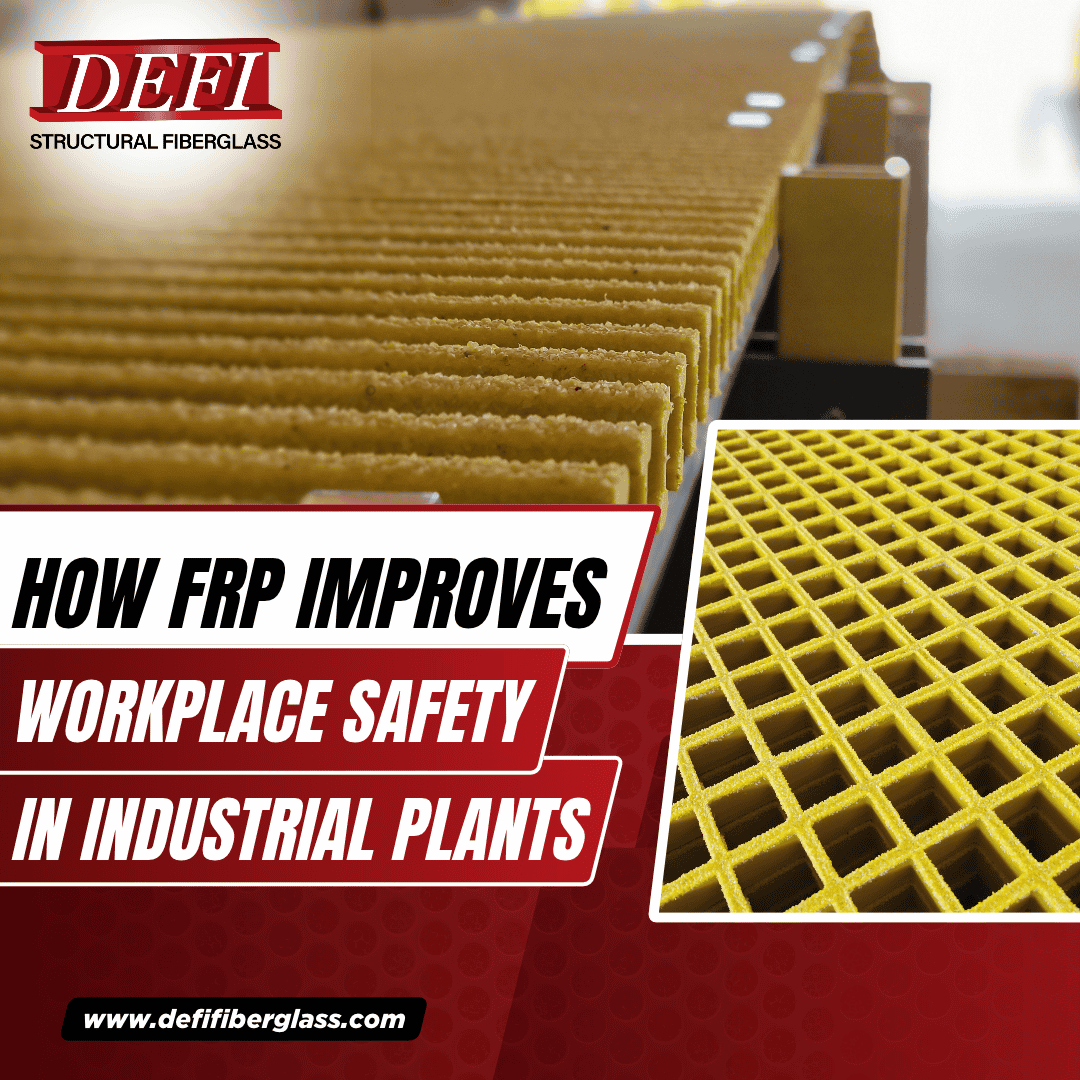
Molded and pultruded grating for platforms, walkways, pipe racks, and stair treads, typically with a grit top for anti-slip traction in wet or oily areas.
-
Pipe supports and cable trays that keep process piping and cable runs clear of standing water and corrosive spills.
-
Structural profiles such as beams, channels, and angles, used to frame platforms and equipment access structures; see DEFI’s guide to FRP beams for how these compare to steel shapes.
-
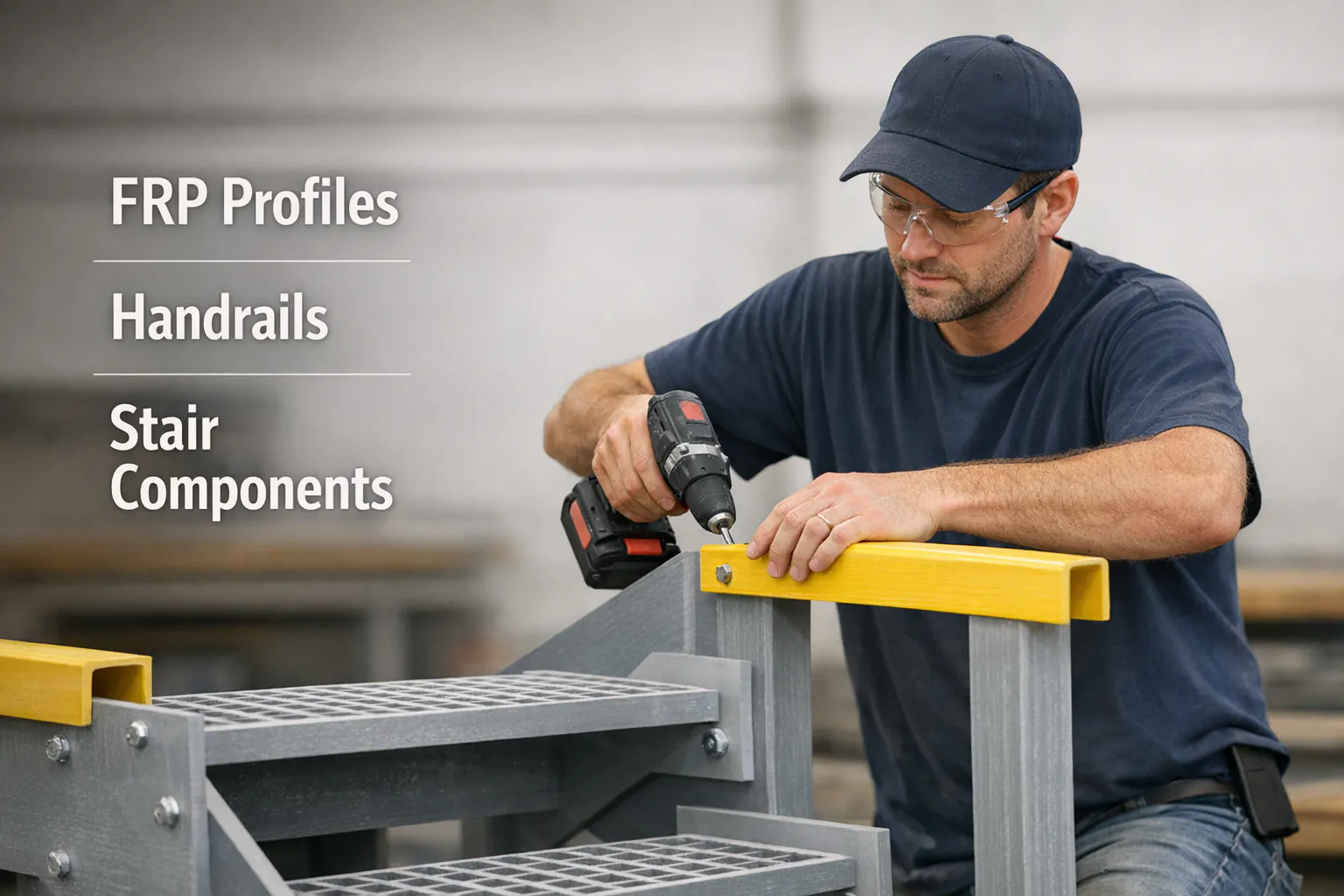
Handrail systems and ladder and cage systems for fall protection on elevated structures.
-
Stair assemblies with contrasting nosing for visibility going up and down.
-
Non-conductive components for use near substations, transformers, and other electrical equipment on a site.
DEFI Fiberglass fabricates all of these from its Houston and Lafayette plants for the full range of oil and gas applications, from access stairs and USCG-approved gratings to covered grating for mud tanks and OSHA-compliant handrail systems.
What to Check Before You Buy FRP for an Oil and Gas Project
Buyers should confirm five things before placing an order: load and span requirements, resin system, fire rating, panel or part dimensions, and the supplier’s fabrication and delivery capability.
Load and span matter most, because grating selected on panel thickness alone can be under-specified for the actual foot or vehicle traffic it will see. Resin system determines chemical resistance; a generalist polyester resin is fine for light exposure, but vinyl ester is usually worth the extra cost in acid or solvent-heavy areas. Fire rating depends on where the part sits and which code applies. Finally, ask for fabrication and delivery information upfront: a project with odd pipe penetrations or tight site access often needs fabrication help, not just a catalog part. DEFI’s Louisiana Structural Fiberglass division fabricates exactly these project-specific assemblies, including pipe penetrations and cathodic protection items, for jobs that go beyond stock grating.
The Bottom Line
FRP has moved from a niche alternative to a standard material choice across the oil and gas industry for platforms, walkways, and structural systems, largely because corrosion and downtime cost more than the material premium. For facilities on the Gulf Coast dealing with salt air, chemical exposure, and electrical hazards side by side, it solves three problems with one product.
DEFI Fiberglass builds FRP grating, structural shapes, and ready-to-install assemblies for oil and gas sites from plants in Houston and Lafayette. Contact DEFI to get load tables, resin recommendations, and a quote for your next project.
FAQ
What does FRP stand for in oil and gas?
FRP stands for fiber-reinforced polymer (also called fiber-reinforced plastic), a composite product made of glass fibers set in a resin matrix. In oil and gas, it’s used for grating, structural shapes, handrails, and pipe supports because it resists corrosion and doesn’t conduct electricity.
Is FRP as strong as steel?
FRP matches or exceeds steel on a strength-to-weight basis. It weighs about a third as much as steel while offering a strength-to-weight ratio that can run up to three times higher, which is why it’s used for platforms and structures where reducing dead load matters.
Can FRP be used offshore?
Yes. FRP is widely used on offshore platforms and subsea structures because it resists saltwater and humidity without coatings. Marine-grade grating used on inspected vessels needs to meet U.S. Coast Guard acceptance criteria and standards like ASTM F3059.
Does FRP need maintenance in oil and gas environments?
FRP needs very little maintenance compared to steel. It doesn’t rust, crack, warp, or require recoating, which is what drives most of its lifetime cost advantage over steel in corrosive environments.
Is FRP grating slip-resistant?
Most FRP grating made for industrial use comes with a grit top or gritted surface for anti-slip traction, which matters in oil and gas areas where oil, water, or mud routinely get on walking surfaces.
How does FRP compare in cost to steel for an oil and gas project?
FRP can cost more than plain carbon steel per unit upfront, but it typically costs less over the life of a facility because it needs no coatings, less maintenance, and fewer replacements. Lighter weight also cuts freight and installation costs.
Where can I find FRP fabrication for a Gulf Coast oil and gas project?
DEFI Fiberglass fabricates standard and custom FRP products from plants in Houston, Texas, and Lafayette, Louisiana, and its Louisiana Structural Fiberglass division handles project-specific assemblies for oil and gas sites in the region.