
Offshore & Marine Applications of FRP: Where Composites Outperform Steel
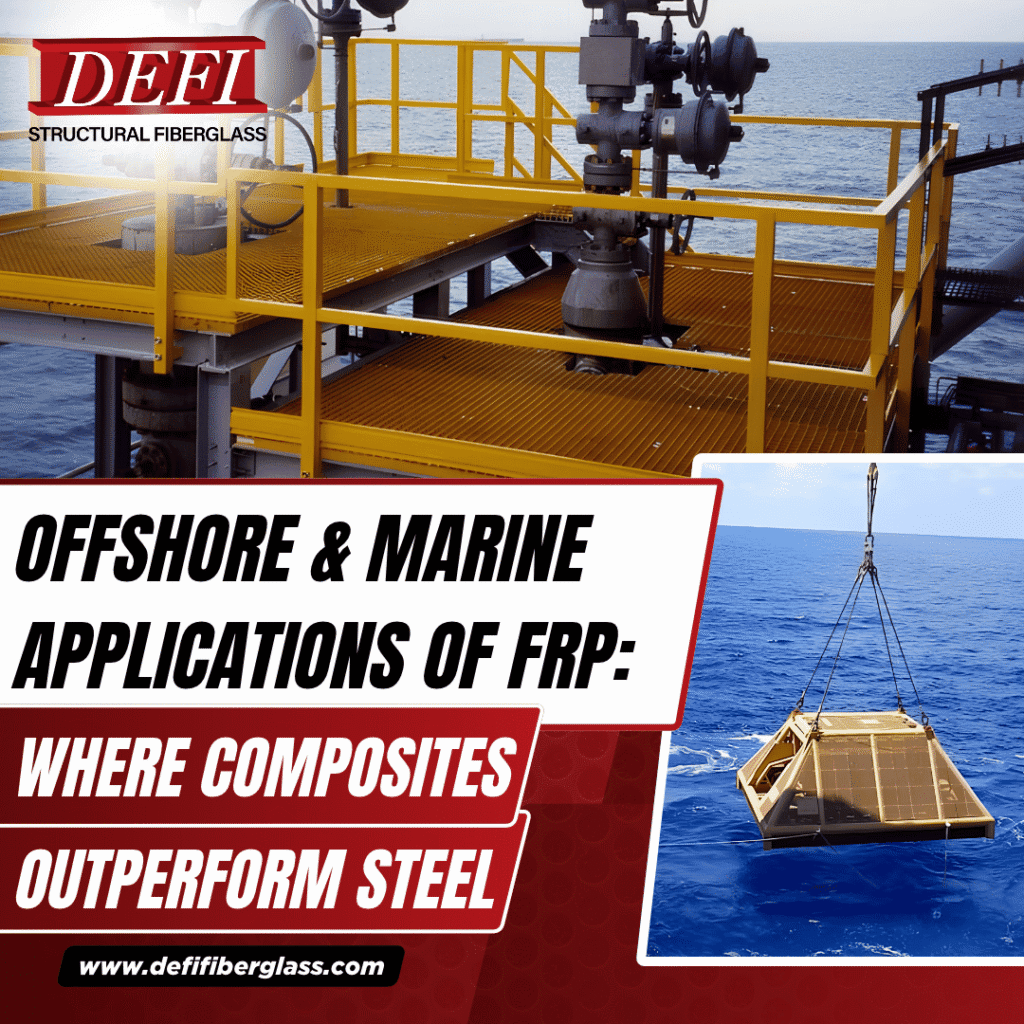
Fiber-reinforced polymer (FRP) is used offshore and in marine settings for platforms, walkways, handrails, cable management, subsea support structures and floating docks, anywhere saltwater, humidity and constant vibration wear steel down fast. It doesn’t rust, it’s non-conductive, and it weighs a fraction of what comparable steel structures weigh, which matters enormously once a component has […]
Corrosion Resistant Materials Compared: FRP, Steel, Aluminum and Concrete
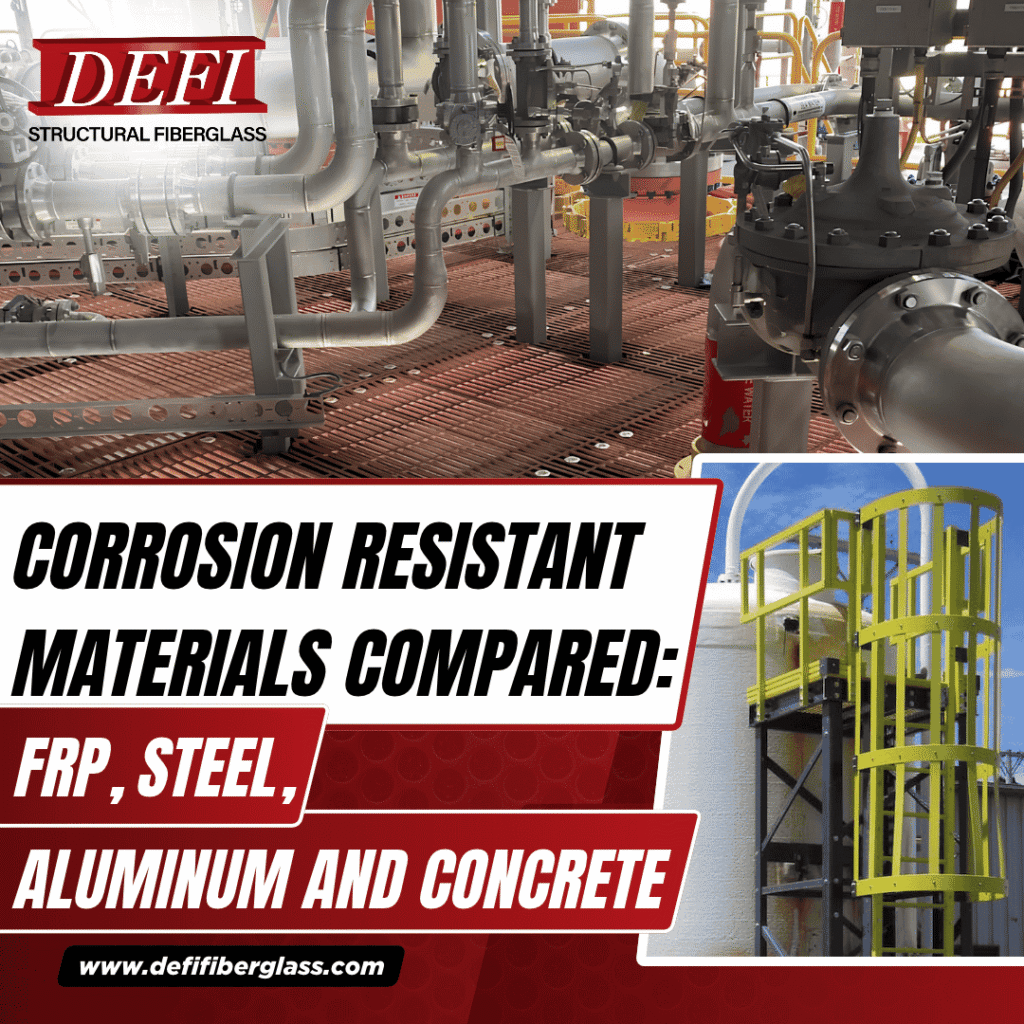
Glass fiber reinforced plastic (GFRP) is a composite of glass fibers set in a polyester, vinyl ester or epoxy resin matrix, built to carry structural loads without rusting, conducting electricity or absorbing water the way steel, aluminum and concrete do. Key takeaways: GFRP runs 1.7-2.0 g/cm³, versus 7.85 g/cm³ for structural steel, 2.7 g/cm³ for […]
How FRP Improves Workplace Safety in Industrial Plants
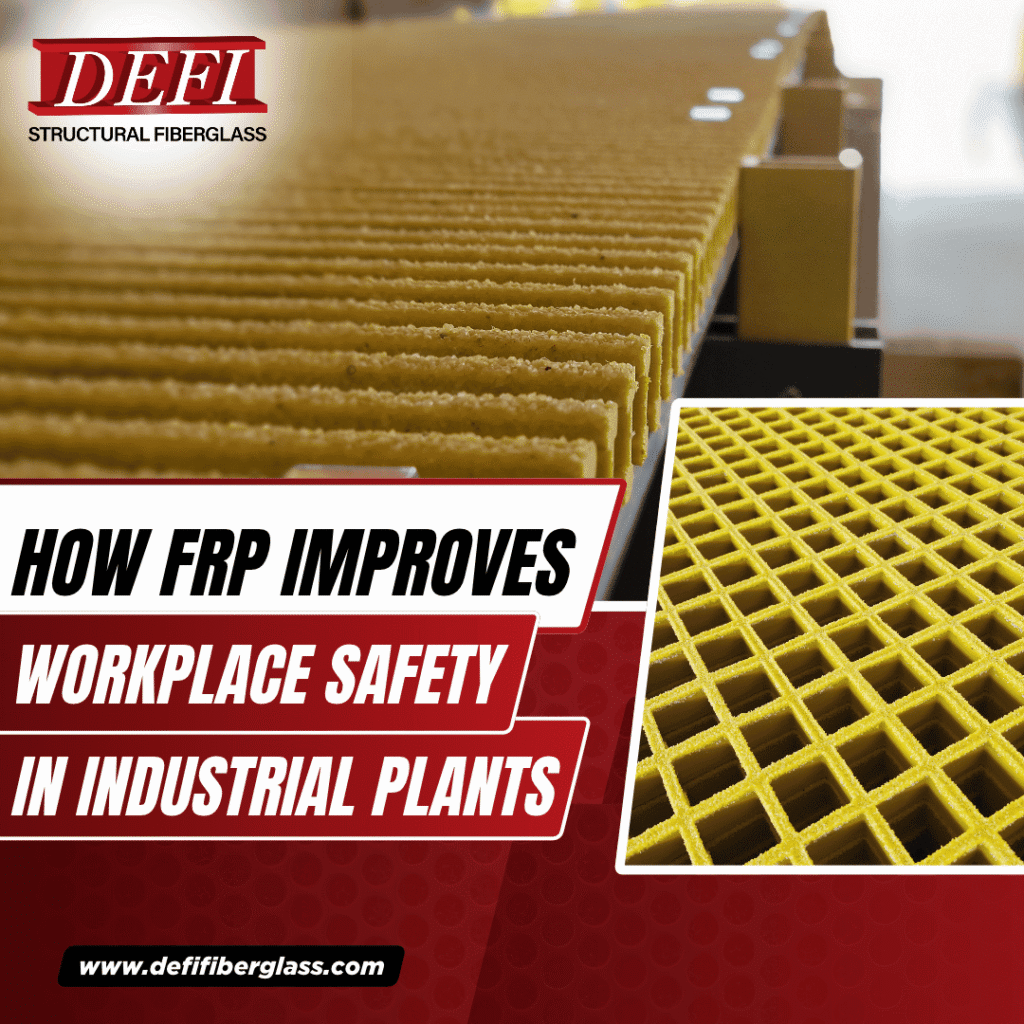
FRP (fiber-reinforced polymer) improves workplace safety because it removes the three hazards that cause the most industrial injuries at once: it doesn’t conduct electricity, it doesn’t corrode into a slip or structural hazard, and it holds its grip even when coated in oil, grease or algae. Steel and aluminum fix one of those problems at […]
OSHA Guardrail Requirements Explained for Industrial Sites
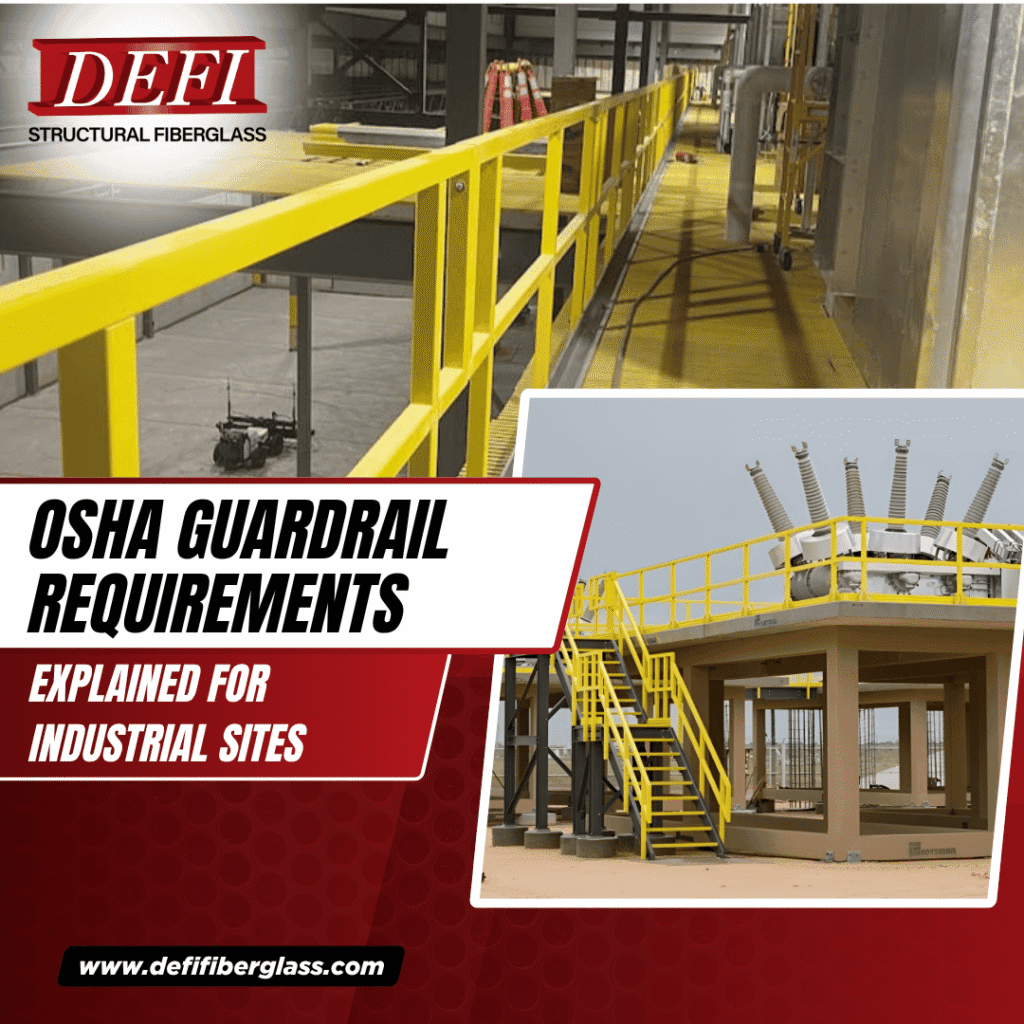
OSHA guardrail requirements set a top rail height of 42 inches (plus or minus 3 inches), a 200-pound strength standard, and a fall-protection trigger of 4 feet for general industry, under 29 CFR 1910.29(b) and 1910.28(b). Construction sites follow an almost identical spec under 29 CFR 1926.502(b), but the trigger height changes to 6 feet […]
FRP in Oil & Gas: Applications, Benefits & Standards
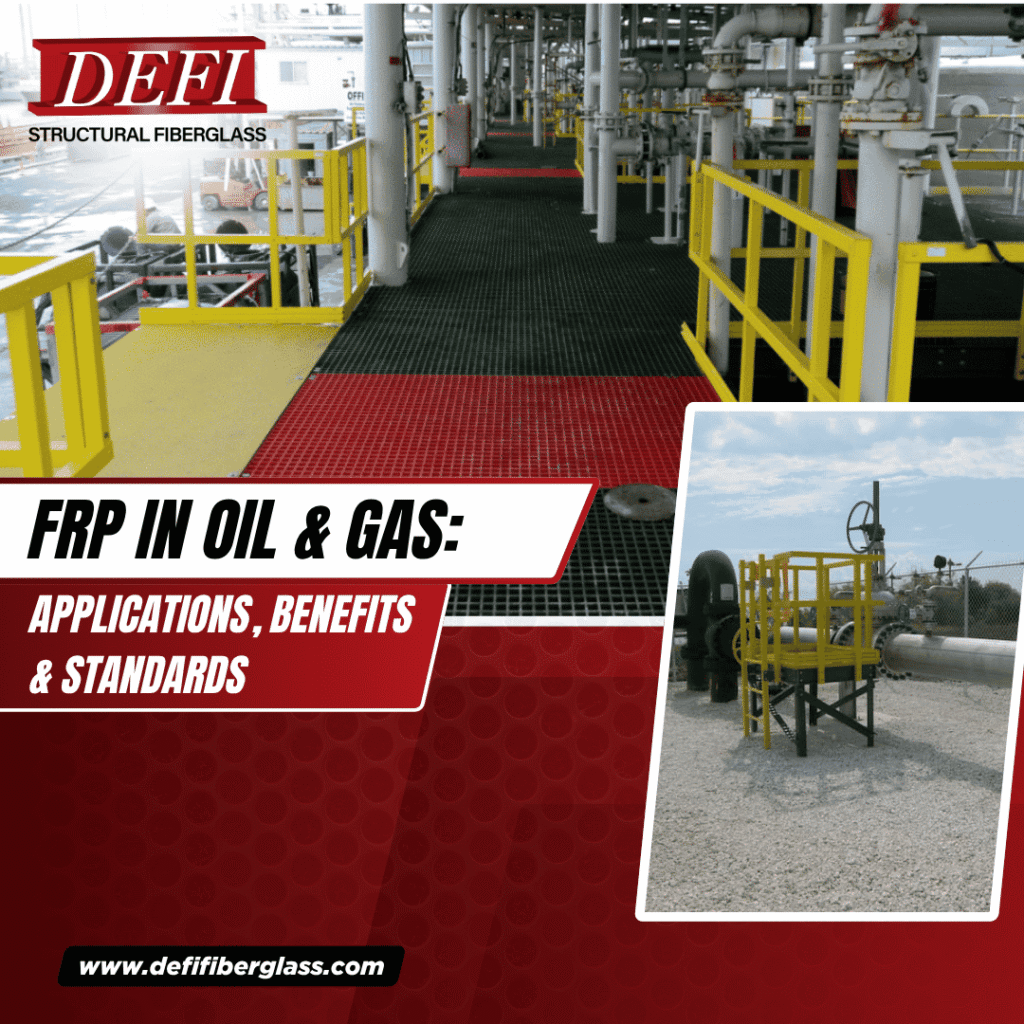
FRP in oil and gas means fiber-reinforced polymer gratings, platforms, handrails, pipe supports, and structural shapes used because the material resists corrosion, carries weight without conducting electricity, and shrugs off the saltwater, chemicals, and humidity that eat away at steel. Across the oil and gas industry, it costs more upfront than plain steel in some […]
Amusement Park Fiberglass Grating & ADA Slip Resistance Guide
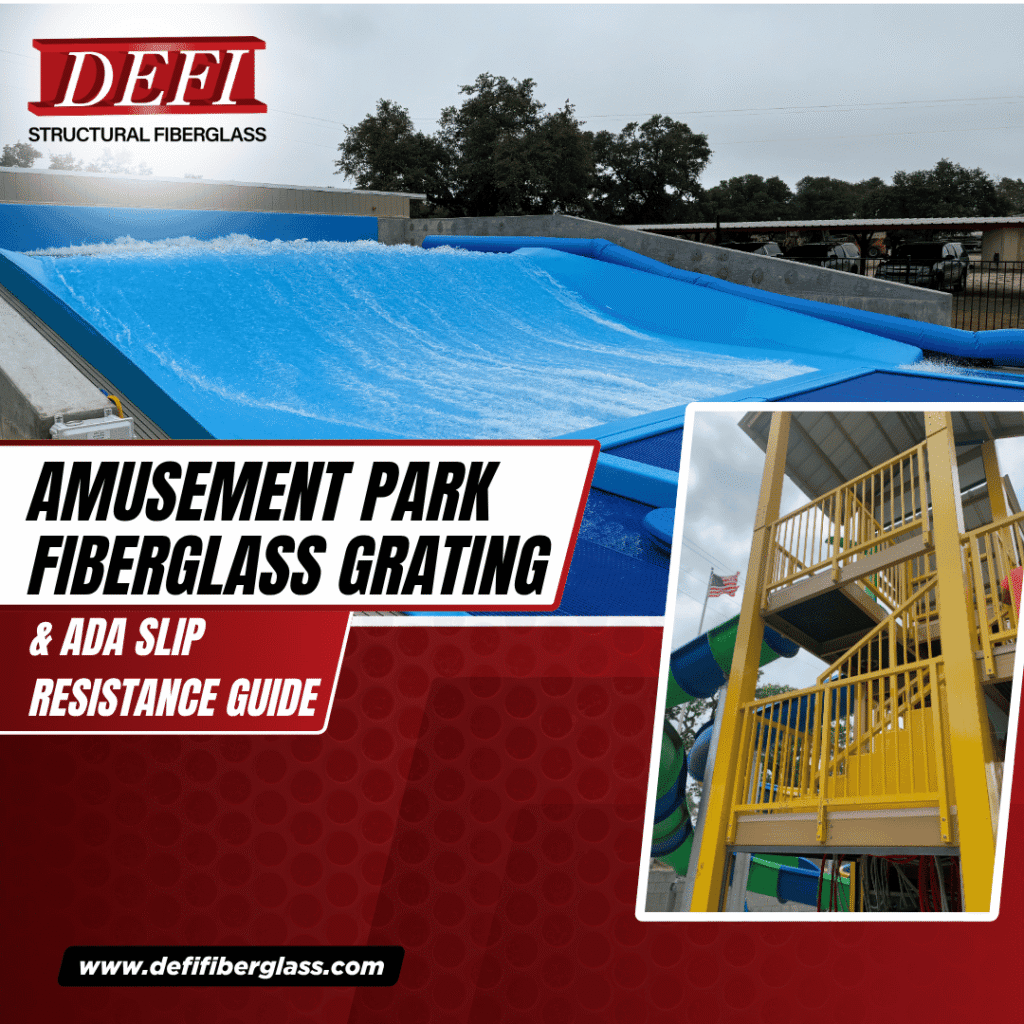
e Amusement park fiberglass grating is molded or pultruded FRP decking with a built-in grit-top surface, available in several grid configurations and resin systems, used on access towers, slide platforms, trench drains and queue walkways because it resists chlorine and weather while staying slip-resistant for bare and wet feet. These FRP grating products meet ADA’s […]
Trench Drains for Concrete: FRP vs. Concrete & Metal Guide
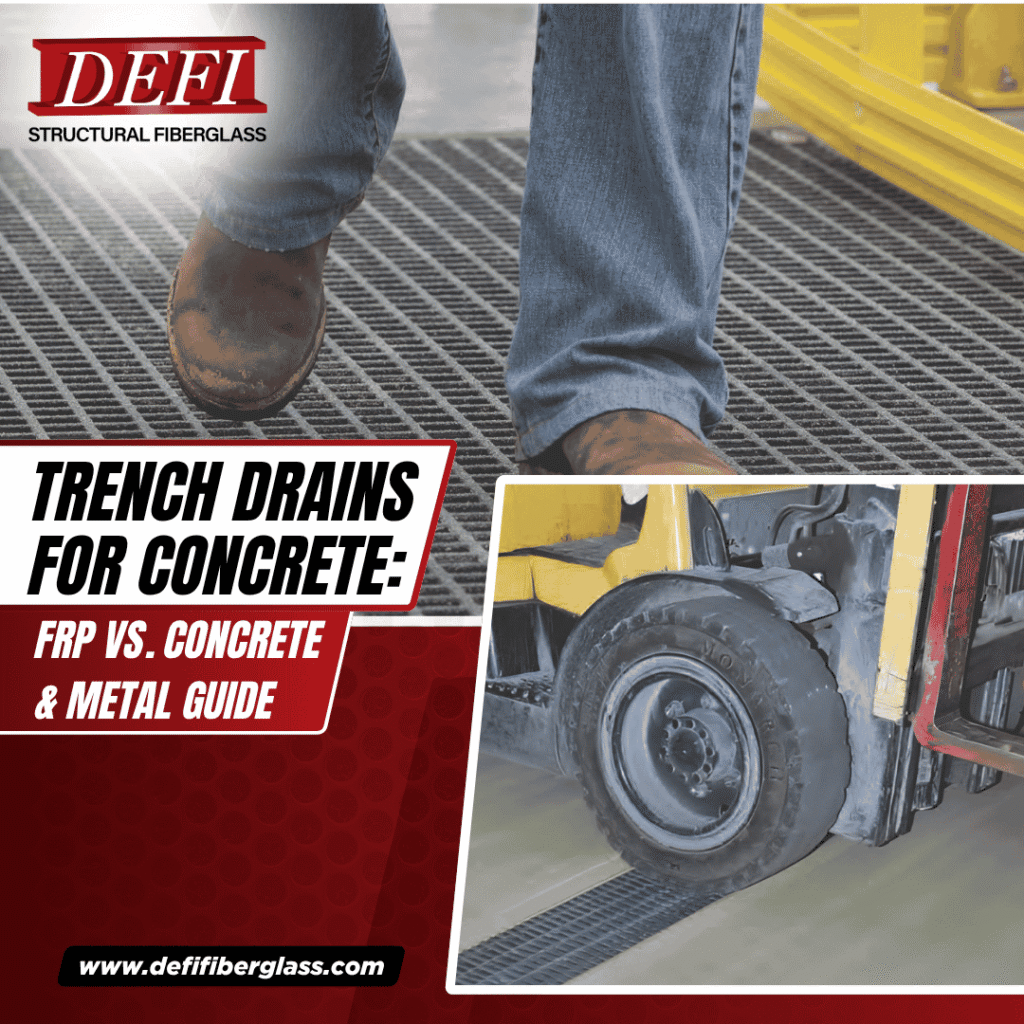
FRP grating trench covers generally outlast cast concrete, polymer concrete and metal trench drain systems in corrosive industrial settings. The fiberglass and resin matrix resists acids, caustics and salts all the way through. It doesn’t rely on a coating that eventually wears off. For facilities handling chemicals, wastewater or saltwater spray, the material behind trench […]
FRP Embed Angles: Sizes, Specs & Installation Guide
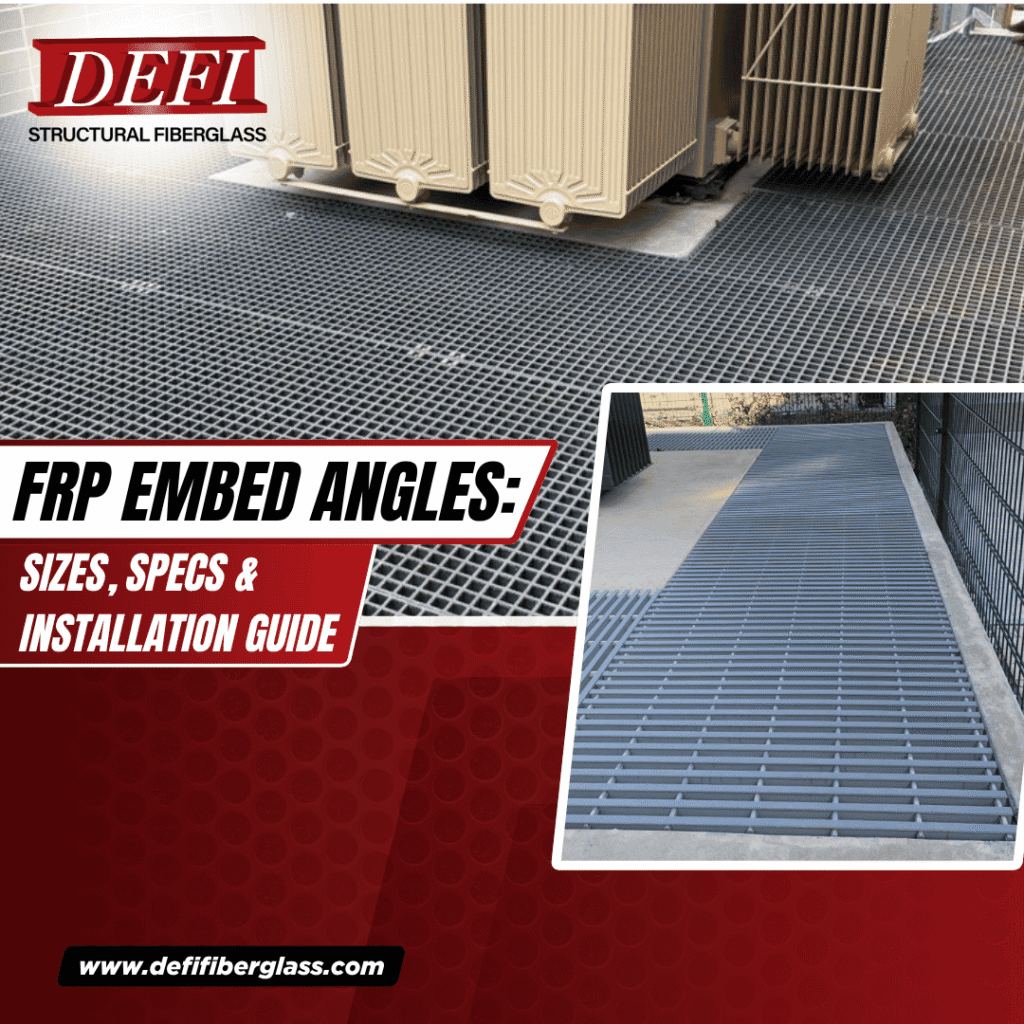
An FRP embed angle, also called an embedment angle, is a pultruded fiberglass profile cast into the edge of a concrete trench, pit or curb to provide a flat, corrosion-proof seat for fiberglass grating products. It replaces steel angle iron in the same spot, so the grating stops rattling and the concrete edge stops chipping, […]
Petrochemical FRP Applications Explained: What It Is, Made From & Used For
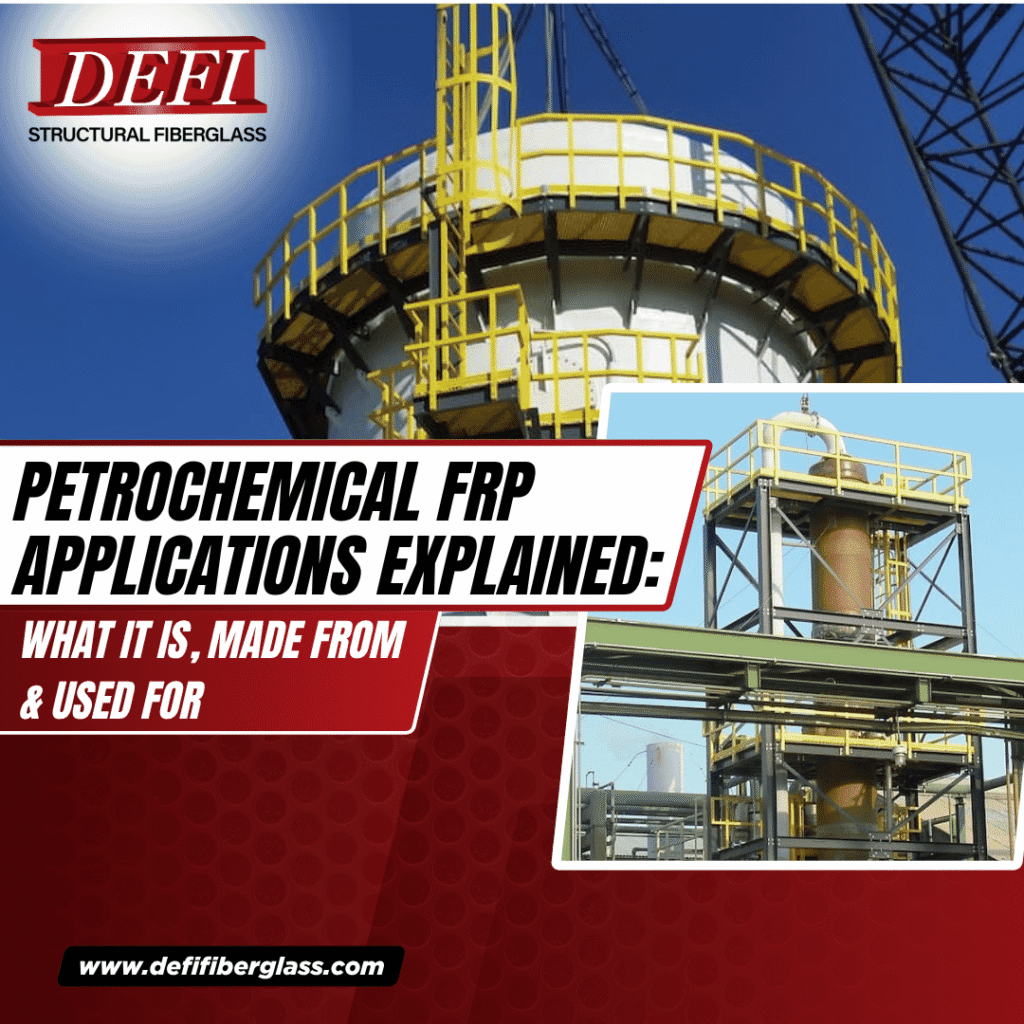
A petrochemical (sometimes written petro chemical) is a chemical compound made from crude oil or natural gas rather than plants or animals. The industry took root in the United States in the 1920s and now anchors chemical manufacturing worldwide. Refineries and crackers break hydrocarbons into building blocks like ethylene, propylene, and benzene, then combine them […]
Fiberglass Beam: Complete Guide to FRP Structural Profiles
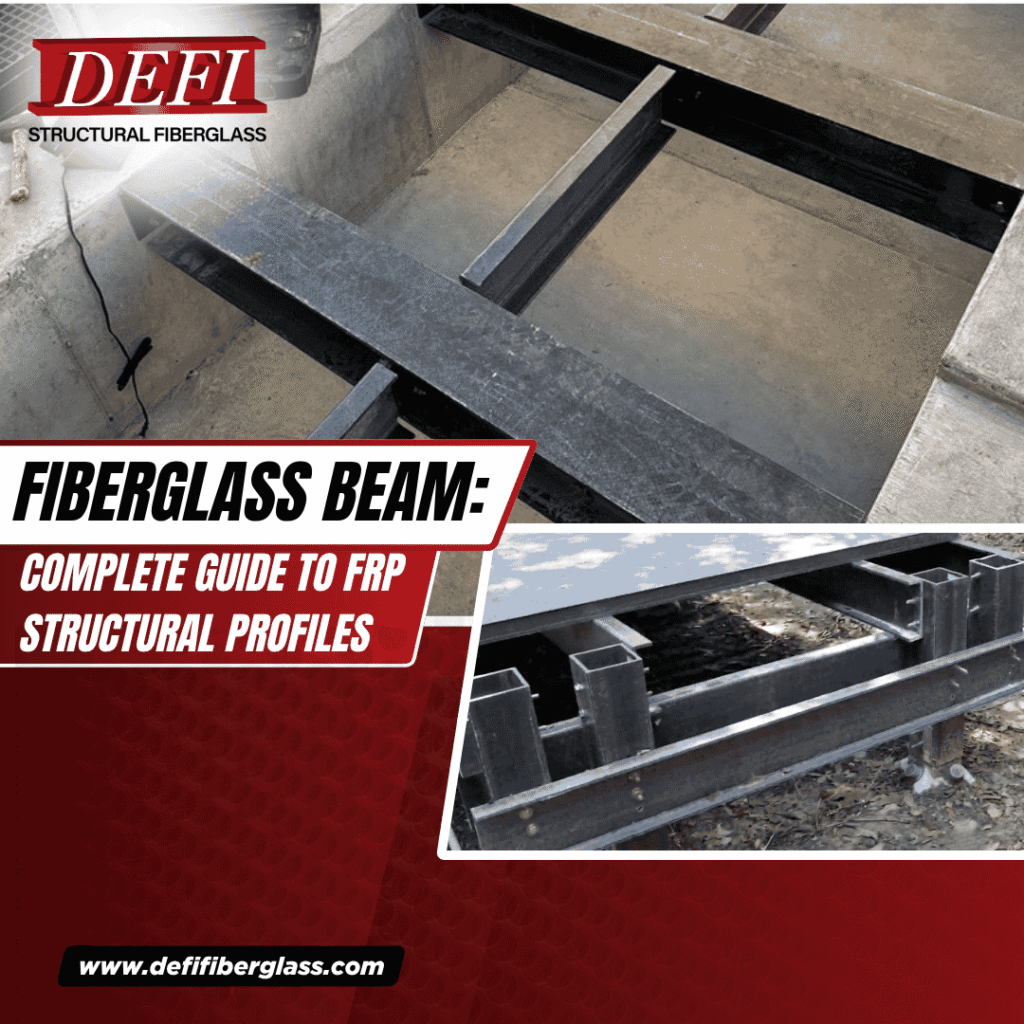
A fiberglass beam is a structural profile made from fiber-reinforced polymer (FRP) that provides load-bearing support in corrosive environments where steel fails. These pultruded beams, available as I-beams, H-beams, channels, and wide flange profiles, weigh 75% less than steel while delivering comparable tensile strength of 30,000 PSI and complete resistance to rust, chemicals, and moisture. […]